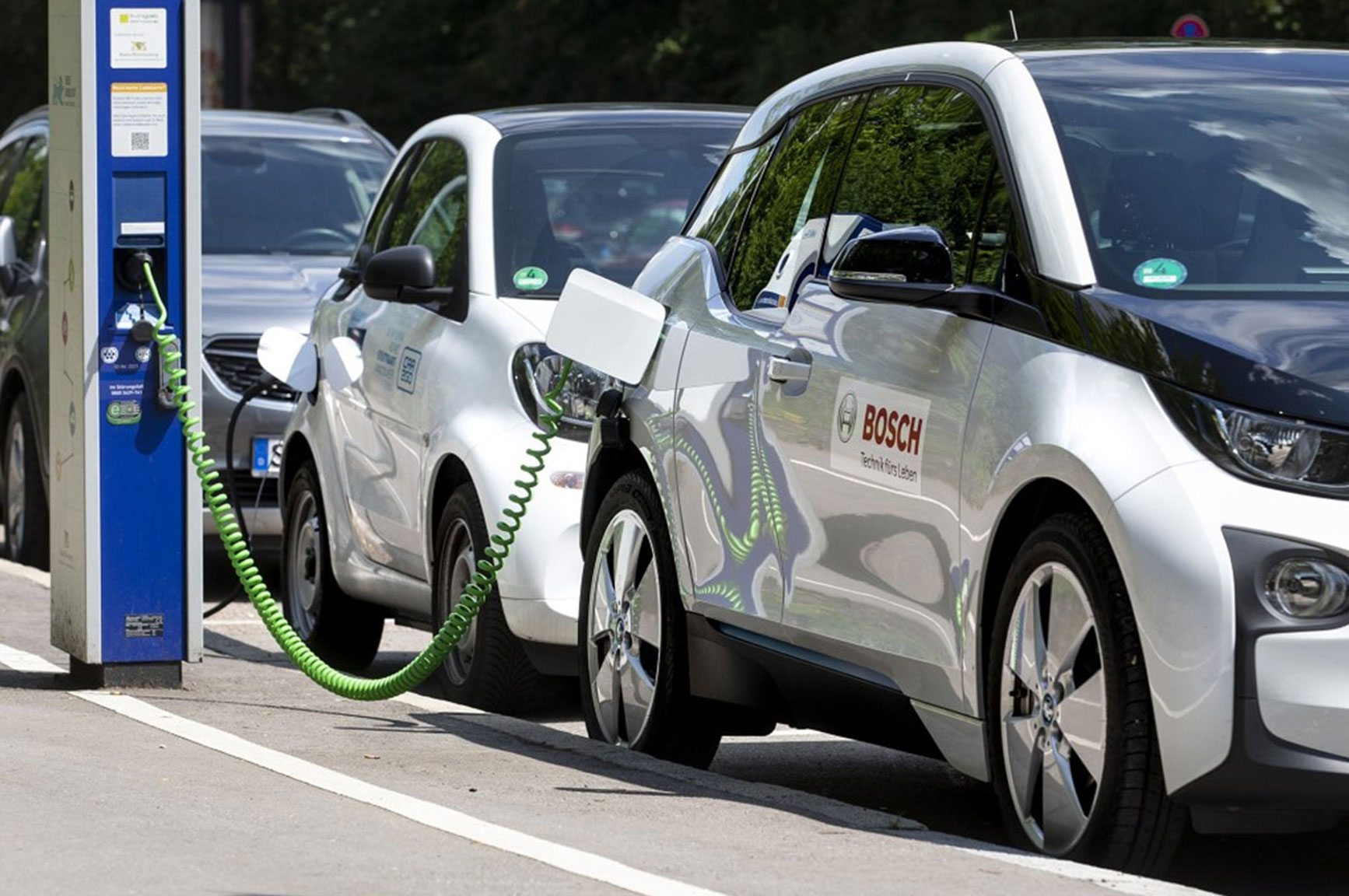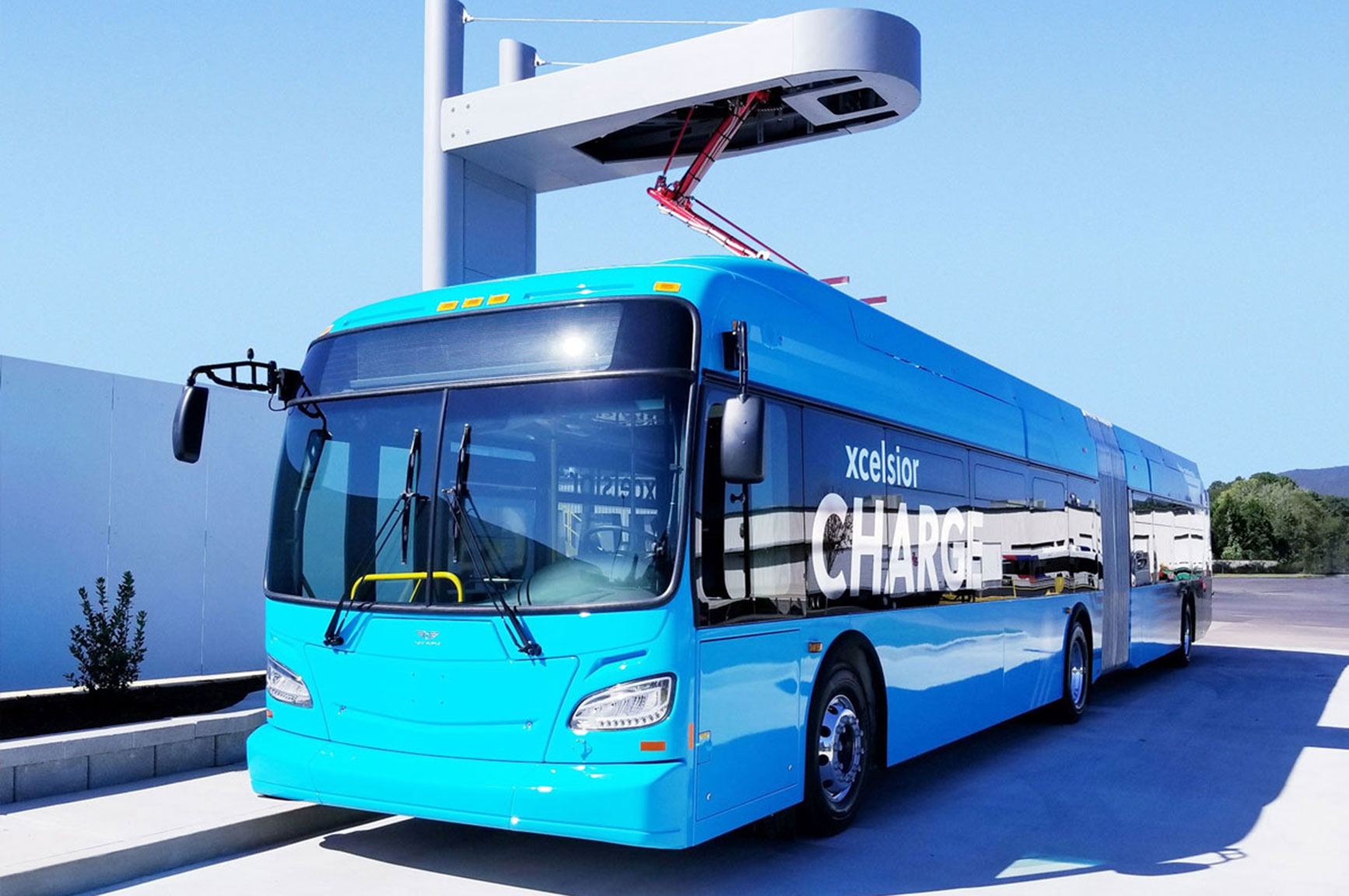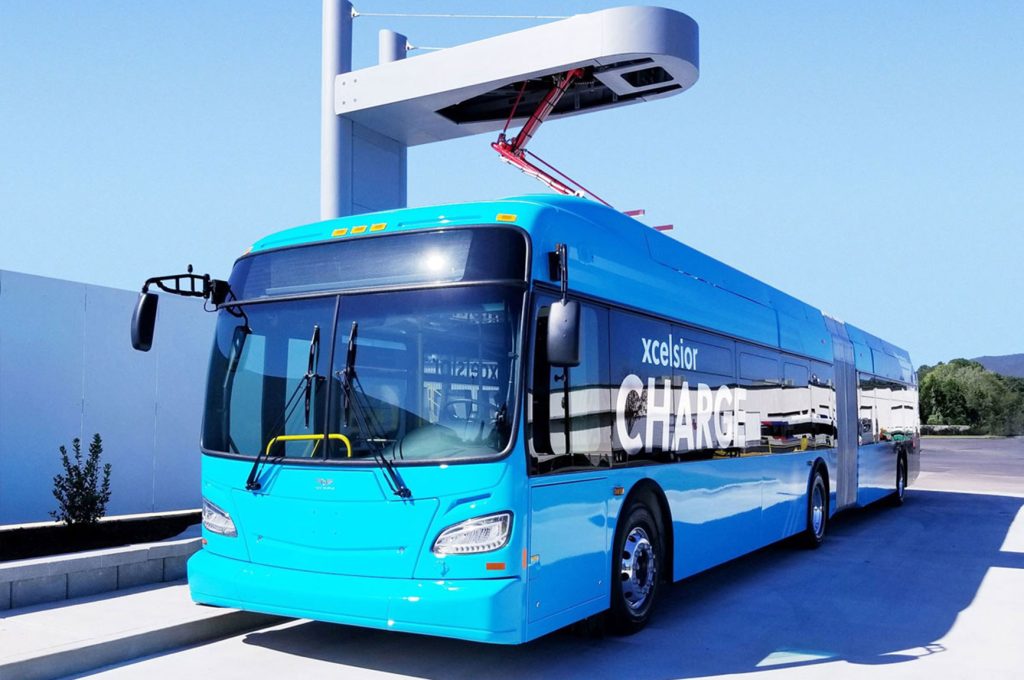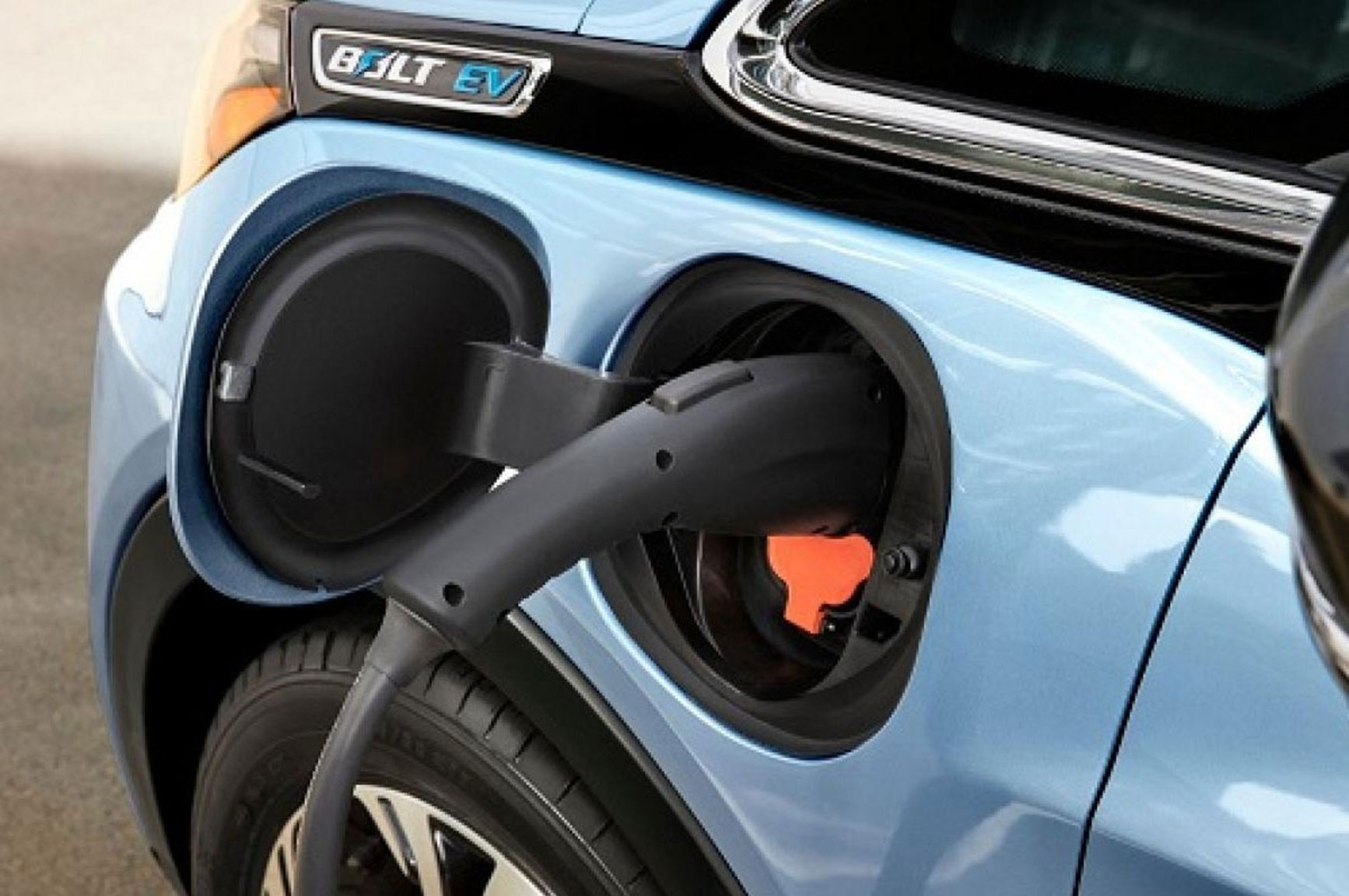


Choice of EV Charging Connectors and Standards for India

This webinar brings experts to share their experience on following topics:

  • EV charging and connectors standards India can commit and develop for AC and DC charging
  • Vehicle design and manufacturing considerations to select a charging standard and appropriate charging connector
  • Cost economics for charging connectors, ancillaries and typical product development to the mass production cycle

India is aiming Big for its EV adoption roadmap, with some earlier Govt. targets suggesting 100% new sales to be EVs across vehicle segments by 2030. This would make some 30%+ vehicles on-road electric (approx. 200+ million EVs) in India by 2030, requiring some 50 million charging points, of which 90% shall be home charging.

Globally, there are more than 2 million EV cars today, with China, Europe, Japan and the USA having current EVs car share of around 1.37%, 1.74%, 0.59% and 0.91% of total stock.

India has taken similar pathway of defining its own custom EV charging standards, called Bharat Chargers AC-001 (240V, 15A, 3.3kW, IEC 60309 connector) and DC-001 (<100V, 200A, 15kW, GB/T 20234 connector) for lower voltage (<120V) electric powertrain architecture. It is in-process to define further standards for both AC and DC charging for medium and higher voltage vehicle segments.

Most industry stakeholders are aligned with India defining its custom charging standards that shall allow lower costs, flexible communications, and easy interoperability for EV charging. A recent report from CEA made some recommendations on Charging standards. Indian OEMs for electric vehicles, chargers, batteries have come a long way in their product development, testing and deployment of EVs and chargers.

A right charging standard definition at country level with right connector selection and this doing it sooner can help India send a strong signal to all players to further speed up their efforts and align with its all EVs goal.

Speakers  

Mr. Vinod ViswanathMr. Ajit K JindalMr. Rahul Bagdia
Sr. Manager Product Marketing,
TE Connectivity
Head Tech, Vice President Tata MotorsCo-Founder and Director
pManifold Business Solutions

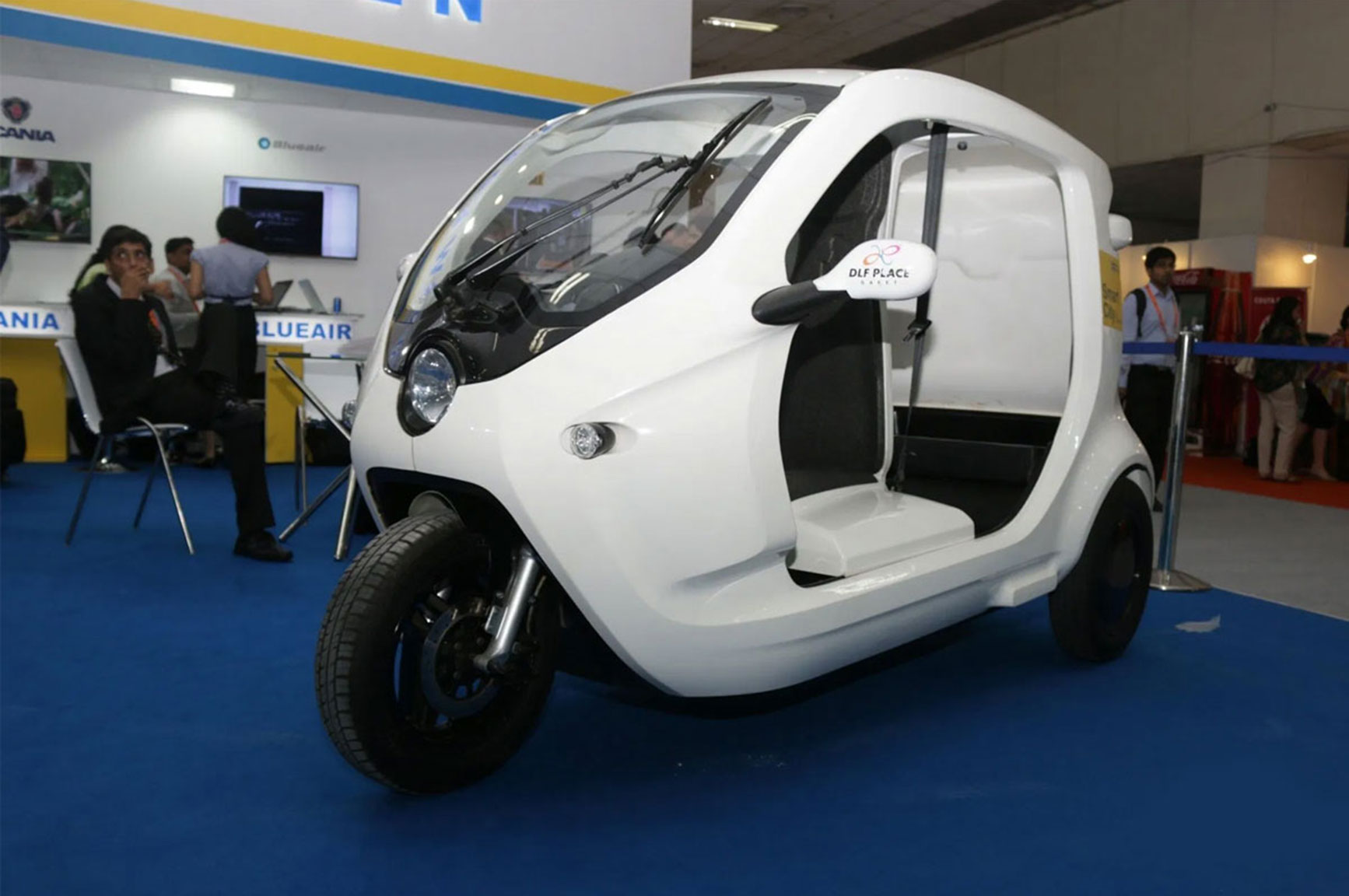
Electric 3-Wheeler Fleet: New Emerging Market Segment in India

Electric 3-Wheeler Fleet: New Emerging Market Segment in India

3-Wheelers (3W) form typical 1-2% of overall city vehicle stocks for most cities in India, and act as an important public mass transport mode. With increasing urbanization, more focus on Transit Orient Development (TOD) and strengthening public transit systems including new Metro rails etc. the importance of 3Ws for first and last mile have further increased.

Current popular variants of 3Ws are those running on petrol, diesel, CNG and electric via lead acid batteries. Current version of lead acid e-Rickshaws serves better economics compared to ICE versions, but have lower speed limits, and also pose environmental challenges (arising from lead recycling).

The new Lithium Ion Batteries (LIB) run e-Rickshaws have advantage of 1) atleast 50% lower battery weight 2) longer battery life 3) fast charging option 4) lower battery degradation 5) higher mileage (kms/day) allowing more income opportunity 6) higher performance in terms of top-speed, acceleration etc. 7) and lower total cost of ownership (TCO). LIB e-3Ws also comes with higher speed options, usually called e-Autos.

There are emerging new players who are taking up 3W Aggregator roles, including that for e-3Ws. While some doing pure app based demand and supply match making, there are some who getting into end-to-end ownership of assets and full fledge charging eco-system, including having drivers on-rolls.

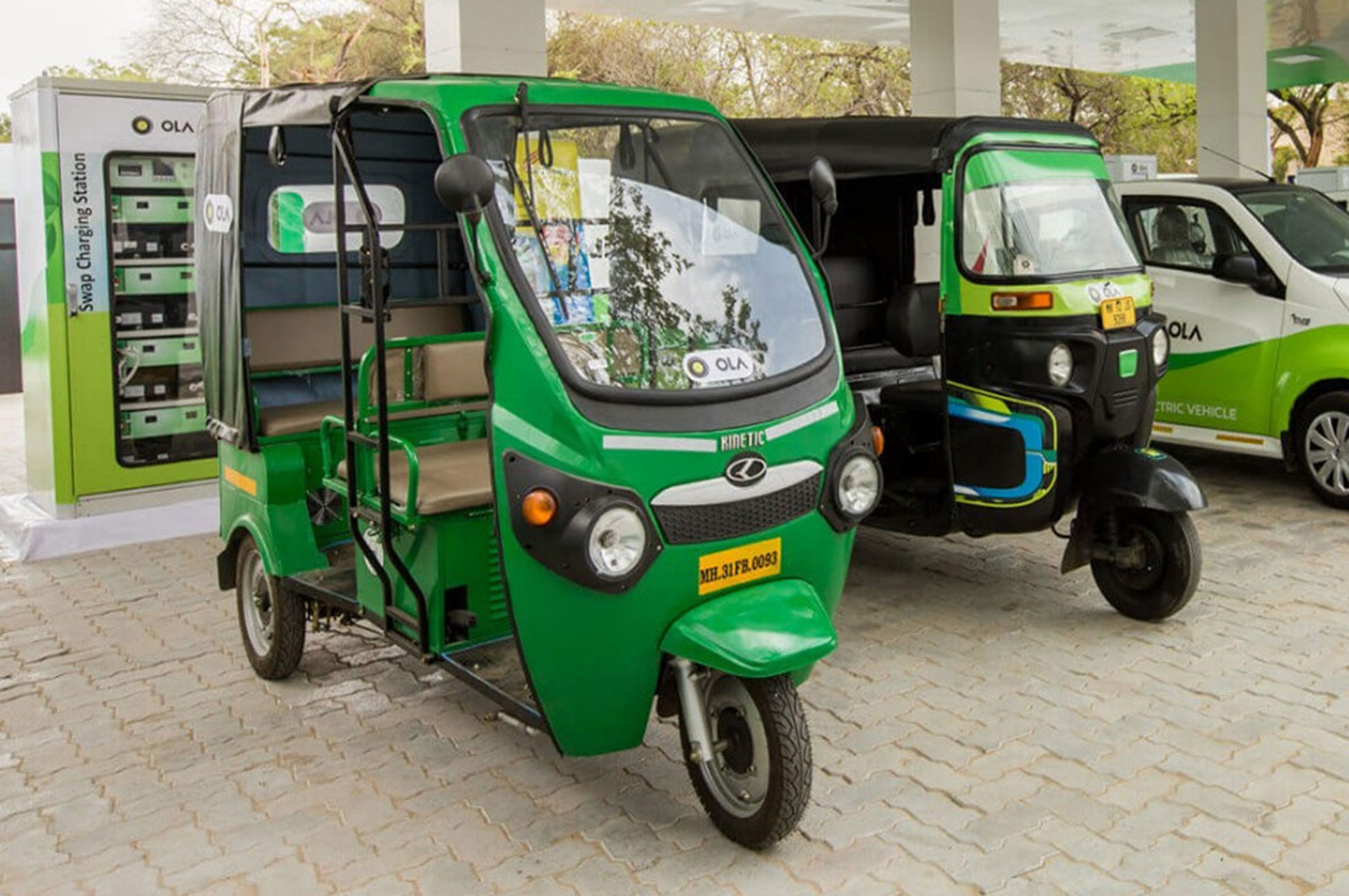
Technology evolution is making further new variants like battery swapping e-Rickshaws and e-Autos reality, and providing option to split overall capital investment separately with an Energy Operator. This shall allow bring better design focus on the vehicle itself and likely 3Ws will no more be yellow-black-green boxes, but more jazzy and comfortable to attract high adoption.

This Webinar topic was focused on:

  • New product, technology, business model, policy and financing innovations in operating electric 3-Wheeler Fleet (including battery swapping)
  • Case study of operating e-3W fleet in India – opportunity, challenges and results
  • What transition pathways and interventions required to move to cleaner e-3W adoption
Speakers
Mr. Goldie SrivastavaMr. Yuvraj SardaMr. Rahul Bagdia
Co-Founder and CEO
SmartE
Senior Manager – Strategy
SUN Mobility
Co-Founder and Director
pManifold Business Solutions

Date and Time: On Wednesday 20th June 2018, 16:00 to 17:45 IST

Power Requirement for EV Charging Stations and Impact on Grid for High Scale Adoption

Power Requirement for EV Charging Stations and Impact on Grid for High Scale Adoption

Rahul Bagdia from pManifold was Speaker for APQI organised Webinar “Power Requirement for EV Charging Stations and Impact on Grid for High Scale Adoption”. pManifold is also NSN Partner to APQI and believe and support improving PQ ecosystem in India. This excerpt is taken from APQI website, and is also available at APQI website.

Topic Background

Over the past few years, Electric vehicles have become a very important part of the automotive industry as we try to look for a future that uses clean energy. Electric vehicles introduce a new concept of benefiting from electricity as the economic clean transportation technology. A lot of research and development has taken place in this field to improve the existing technology and to develop efficient ones.

This continued emphasis on research and development has resulted in great improvements in the technology of EVs. The National Electric Mobility Mission Plan (NEMMP) 2020, notified by the Department of Heavy Industry, Ministry of Heavy Industries and Public Enterprises, GoI seeks to enhance national energy security, mitigate adverse environmental impacts from road transport vehicles and boost domestic manufacturing capabilities for Electric Vehicles (EVs).

However, due to the effects of EVs on power sector and the electric network operation, utilities need to be concerned about reliable and safe operation of the network in presence of EVs. Electric vehicles have uncertain penetration in electric grids due to uncertainties in charging and discharging patterns.

This uncertainty makes it difficult to accurately assess the effects on local distribution network. Extra electrical loads due to uncoordinated charging of electric vehicles has different impacts on the peak load management. The distribution & transmission capacity will need adequate augmentation with penetration of EV chargers, for which the discoms shall require special planning and interventions.

EV chargers will often introduce power quality (PQ) issues within distribution circuits, which can have detrimental effects on system components. PQ encompasses several effects such as harmonic distortion, DC offset, phase imbalance, and voltage deviations, among others in myriad ways.

This webinar brings experts from the field of service provider/utility and technical consultant to share their experiences on the following topics:

  • Power requirement for EV charging stations in India to maintain power quality in the network
  • Impact of EV charging stations on grid components (specially transformers, being the most vulnerable)
  • International best practices that can be undertaken by India for EV promotion and integration

Presentation coverage by Rahul Bagdia

  • What are the different technologies used for EV Charging?
  • What are the implication on grid for size of charging stations and different vehicle segments?
  • What are different regulations and policies around power supply to the charging stations?
  • What impact of EV load do you foresee on the overall grid? Any caution notes for Indian Discoms for grid integration?
  • How can DISCOM use electric vehicle adoption to generate revenue? Any business model?

The full webinar presentation and recording can also be downloaded from APQI website.

EVs Battery System Design: Pack Assembly, Thermal Management, BMS & Integration

EVs Battery System Design: Pack Assembly, Thermal Management, BMS & Integration

Lithium-Ion Batteries (LIBs) take up ~40-50% cost of EVs, with its approx. one-third cost in materials, one-third in battery pack and last one-third in BMS. India is projected to have ~200 million EVs by 2030 on road, with then estimated cumulative ~1000 GWh LIBs in the system, and continuing annual addition of ~150-200 GWh in following years.

The value chain of LIBs shall constitute material supplies, cell manufacturing, cell to battery pack manufacturing, and BMS manufacturing. Further it shall be OEMs who shall integrate the LIBs in their vehicle, with main interaction with i) EV Charging circuit

ii) Discharging circuit (including Power Train drive)

iii) vehicle electronics & communications

iv) battery and/or vehicle cooling. The end-users care for (long) range, (faster) charging time, (higher) top speed and acceleration and lower TCO from their EVs, and these attributes has high interrelation with choice of battery, its management and cost trade-offs.

Battery pack design, thermal management, BMS and Vehicle Integration – all four plays very important role to get best value of the costliest single component in EVs.

This Webinar topic was focused on:

  • Understanding Battery Pack and BMS key constituent elements and their design rationale for new age EVs in India
  • Learning different practices for Battery Thermal Management and arising challenges and advantges
  • Learning from different testing results on key fail safe criterion for LIBs to build effective battery control and management for optimal battery-vehicle performance and high battery life
  • What competencies and edge India can focus to grab sizeable market share in battery manufacturing and BMS
Speakers
Mr. Nikhilesh MishraMr. Huzefa A CMr. Rahul Bagdia
Chief Technology Officer
Grinntech Motors & Services (P) Ltd.
Domain Head – Electric & Hybrid Vehicle Technology
Ashok Leyland
Co-Founder and Director
pManifold Business Solutions

Date and Time: On Wednesday 18th July 2018, 16:00 to 18:00 IST.

Webinar Recording:

e-Bus Transition: Viability for STUs?

India has some 52 STUs/SPVs operating with some 1.47 lacs bus stock (till FY 2015-16). Out of this total stock, rural share is 80%, urban is some 17% and hilly region is 3%. In the same year, ~7,250 new buses were annually added with 85% market share between only two companies.

In the same year, similar ~6,500 number of buses were scrapped. Total revenues in FY 2015-16 were INR 51.75K crores with INR 12.63K crore losses. Only 7 of total 47 reporting STUs showcased profits (Karnataka SRTC, BMTC, UP SRTC, Punjab Buses, Odisha SRTC, Kadamba TC (Goa), and Himachal (HRTC).

e-Buses with current technology roadmap holds potential to provide cleaner public transport advantage at comparable Total Cost of Ownership (TCO) with existing diesel options. pManifold analysis shows that current diesel bus operation costs some 58 Rs./km, while that of e-Bus with 100km range can cost comparable 57 Rs./km.

Increasing range to 200 kms can cost some 61 Rs./km. GOI in one of its tender has supported procurement of 390 e-Buses under FAME scheme for 11 cities. The bidding results are out, but there is still e-Buses to be seen operational under this tender, though small pilots with some STUs are in progress.

While cleaner air will be one important outcome from e-Buses adoption, it will be important to understand if and how they also emerge as techno-commercial viable option for STUs, and what more and right needs to be done today.

This webinar focused on:

  • Understanding business proposition for e-Buses to STUs
  • What problems of STUs e-Buses can solve, and what it cannot
  • What business models for STUs to finance and operate e-Buses including charging and maintenance
  • What considerations for STUs to procure e-Buses, and for cities to integrate e-Buses appropriately
          Speakers
H. K. GuptaChief General ManagerHimachal Road Transport Corporation (HRTC)Laghu ParasharSenior AdvisorUrban Mass Transit Company Limited (UMTC)Rahul BagdiaDirector and Co-founderpManifold Business Solutions Pvt. Ltd.

LIB Reuse and Recycling – Creating Secondary Market for Batteries in India?

LIB Reuse and Recycling – Creating Secondary Market for Batteries in India?

Today 40-60% of EV cost comes from LIBs. If there can be a fluid secondary market for scrap batteries (derived from second life use and recycling), then there will be certainty in resell value for LIBs, which will then allow building the right financial loan instruments for EV financing. Additionally, LIB recycling ensures adding to the supply of otherwise scarce precious metals back into the system.

LIB recycling is an emerging new industry globally. ~50% of spent LIBs assets are recovered and recycled in Europe, China, South Korea, and Japan. In contrast, less than 5% of all LIB assets are recycled in the US. While cobalt and lithium are thought to be the two most valuable metals found in Li-ion batteries (with consumption of both reportedly outpacing production in the last couple years), other metals like iron, nickel, aluminum, and magnesium also have positive revenue implications when recycled.

India stands at the early stage of seeing EV and Energy Storage influx, which in later years will constitute the highest share in overall LIB waste. If it can regularize LIB waste through strengthening reuse and recycling eco-system, it will go a long way in securing its EV supply chain, and also driving adoption with improved EV financing.

In this webinar, we shall focus on:

  • Why India should worry about reuse and recycling of LIBs?
  • How to ensure 100% LIBs from EVs come for recycling?
  • What technology options for efficient and viable LIB reuse and recycling?
  • What policy measures to improve LIB recycling in India?

Understanding EV customers: What is required to increase EV adoption in Indian cities?

Understanding EV customers: What is required to increase EV adoption in Indian cities?

India downsize its 100% new sales target for Electric Vehicles (EVs) to 30% by year 2030. Achieving this revised target will not be easy journey, and specially so with big democracy and diverse country it is. The diversity at city level is huge, and this provides both challenges and opportunities. It was industry participation and city level entrepreneurship traction that resulted into early pilots in e-Mobility in India, despite Centre delays in announcement of dedicated National e-Mobility Mission.

Government has important role in setting targets, streamlining actions between different stakeholders and guiding early investments. But ultimately, it will be market forces that has to sustain e-Mobility development and its right scale-up.

A big question comes as how these market forces can be developed speedily and coordinated for more and more well integrated EVs deployment in cities. The EV team at pManifold has pilot studied 10 Indian cities through mix of primary and secondary research and built insights on performance, expectations, challenges and preferences by actual EV users (across 2W, 3W and 4W), potential EV buyers, EV dealers and charging operators.

The insights developed can help EV community including cities to bottom-up strengthen their EV planning and deployment in areas of

1) Product Development

2) Production Supply Chain Strengthening

3) Charging Infrastructure and Services

4) Financing

5) Institutional structure for policies execution across different departments.

In this webinar, we focused on:

  • Key insights from stakeholders for city level EV adoption
  • City EV Readiness Scorecard developed by pManifold
  • Comparative city EV readiness (for piloted 10 cities)

Speakers

  1. Rahul Bagdia, Director, pManifold
  2. Ankit Agrawal, Princiapl Consultant, pManifold
https://youtube.com/watch?v=rPmpw-SfZrc%3Ffeature%3Doembed

Download Presentation by Mr. Rahul Bagadia 

Download Presentation by Mr. Ankit Agrawal

EV Sales Mantra: Outlook by EV Dealers

EV Sales Mantra: Outlook by EV Dealers

India is aiming to lead EV race with the latest push in the budget. The government have set a target to reach a 30% sales share for EVs by 2030. To practically achieve this target, the market will need a commitment of EV-friendly policies, consumer awareness, vehicle charging networks, and manufacturing capabilities.

In automobile industry, dealers play a significant role in market penetration, they are the customer touch point responsible for sale and post-sales service support. EV being new technology, the customer awareness or acceptance is low, resulting into low sales volumes. As a result, many EV dealers are struggling to increase their sales. Therefore, it is important for all stakeholders to understand the dealer’s outlook in EV as they provide ground-level facts and help to understand the product feedback, EV demand-supply scenario, and possible pathways to increase the EV sales.

This webinar has addressed below concerns of EV Dealers:

  • How economical is to own e-2W and e-3W when compared to ICE based vehicles?
  • What marketing activities are leading to better sales? What support from OEMs could further drive EV sales?
  • Is EV dealership a good opportunity?
  • What are the learning, experiences and customer feedback around EVs?  (with some case studies)