

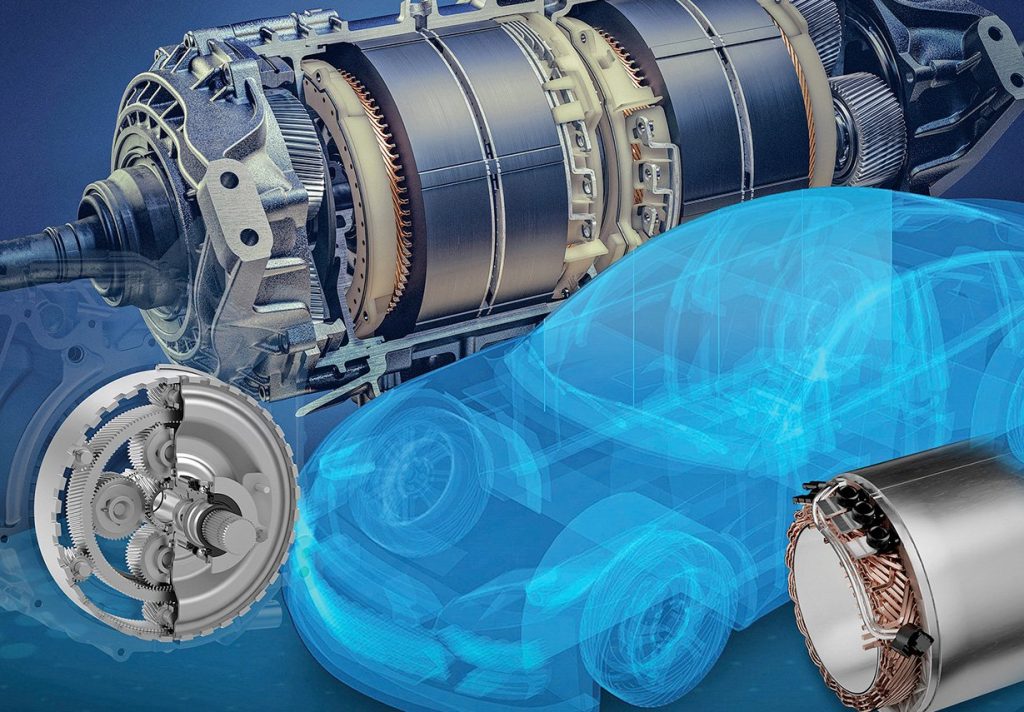
Electric Motors: The Driving Force Behind EVs

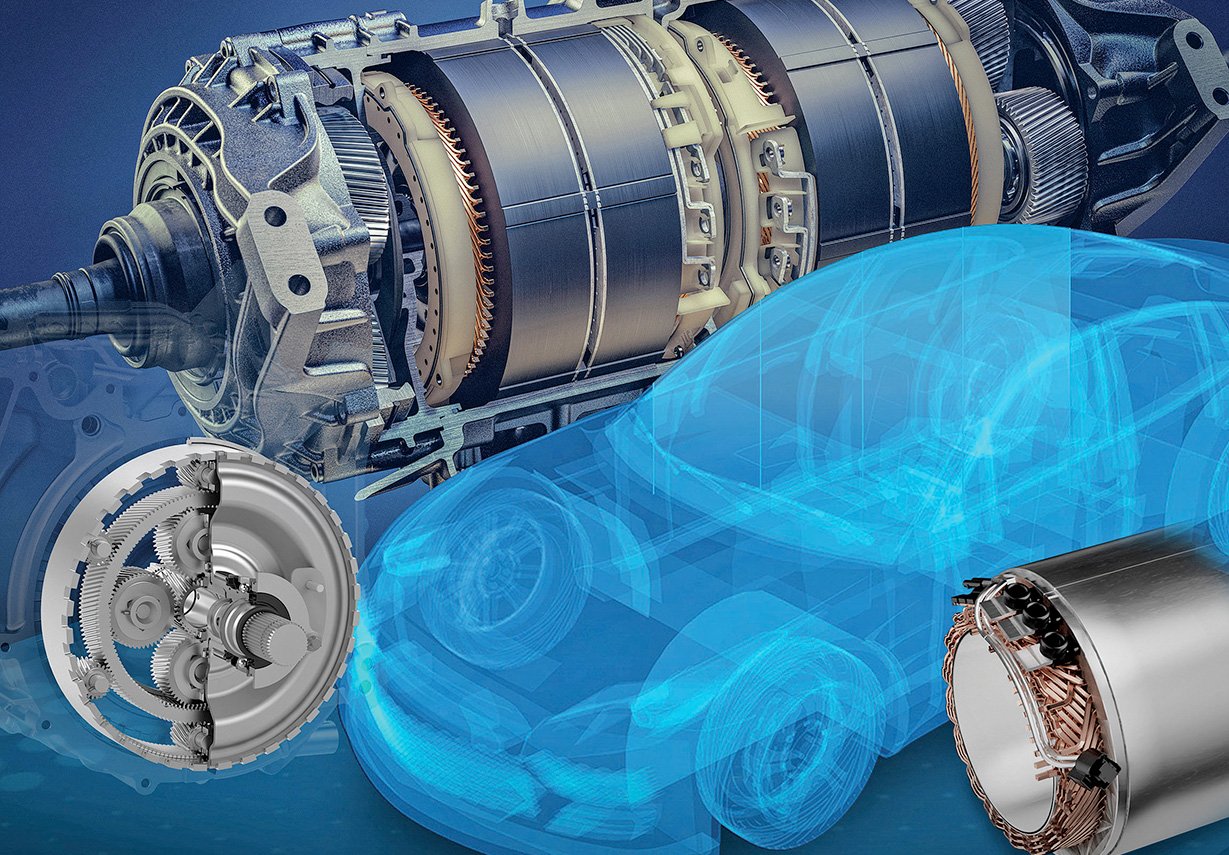
Electric vehicles (EVs) have emerged as a transformative force in the automotive industry, promising a cleaner, more sustainable future for transportation. At the heart of every electric vehicle lies a crucial component: the electric motor. This compact yet powerful device is responsible for converting electrical energy into mechanical motion, propelling EVs forward with remarkable efficiency. In this blog, we shall delve into theworld of motors for electric vehicles, exploring their types, characteristics, significance and players in the EV revolution.

Types of Electric Motors:

Electric motors for EVs are classified into two main categories: DC and AC. While both find place in EV application, DC motors stand out for their robustness and simple control. DC Motors come in brushed and brushless variants. Brushed DC motors, though cost-effective and offering high torque at low speeds, are less favoured in EVs due to their larger size, lower efficiency, and frequent maintenance needs. In contrast, brushless DC motors excel with notably higher efficiency, employing electronic commutation rather than brushes. AC motors, on the other hand, boast benefits like superior efficiency, reduced maintenance, heightened reliability, and regenerative capabilities for efficient braking energy recovery—making them a popular choice in EVs.
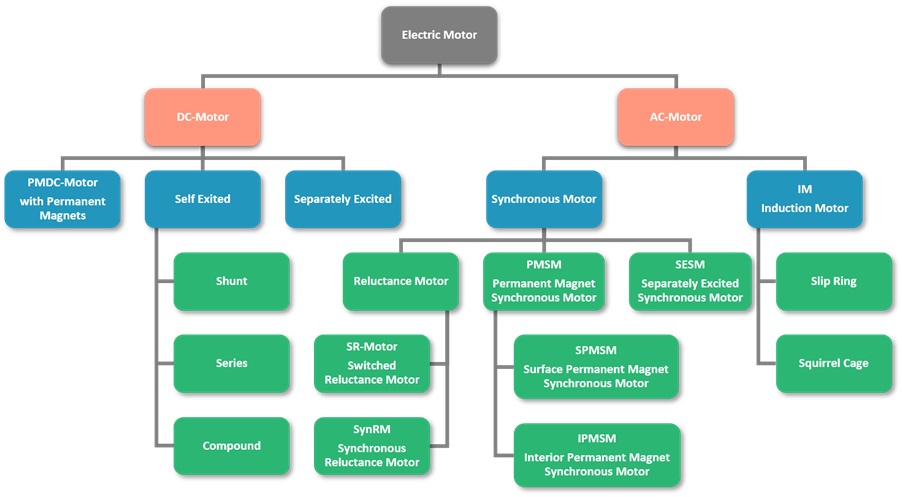
The performance of the EV is intricately tied to the specific electrical motor specifications, which are defined by the torque-speed and power-speed characteristics of the traction motor. Below are the key features of the Electric Motor required for an EV

EV Motors and their characteristics:

DC Motors: Simplifying Control and Boosting Torque

  • Robust Build and Simple Control: DC motors shine in EVs with their sturdy construction and straightforward control.
  • Torque-Speed Advantage: They deliver high torque at low speeds due to appropriate torque-speed characteristics.
  • Drawbacks: However, they come with size constraints, lower efficiency, maintenance demands, and limited speed range due to brush friction.

Permanent Magnet Brushless DC Motors (PM BLDC)

  • Magnet Magic: PM BLDC motors use permanent magnets, offering higher efficiency by eliminating rotor losses.
  • Constant Power Challenge: They have a shorter constant power operation range, but this can be extended using conduction angle control.
  • Limitations: High temperatures affect magnet strength, influencing torque capacity. Mechanical forces and cost are key concerns.

Induction Motors (IM): The Workhorses of EVs

  • Simplicity and Reliability: IMs are popular in EVs for their uncomplicated design, high reliability, and robustness.
  • Safety Advantage: They can naturally de-energize in case of inverter faults, enhancing EV safety.
  • Trade-offs: Slightly lower efficiency compared to PM motors, higher power losses, and lower power factor are their downsides.

Permanent Magnet Synchronous Motors (PMSM): Efficiency and Power Density

  • Magnets in Sync: PMSMs, like BLDCs, feature permanent magnets, but with a sinusoidal back EMF waveform.
  • Efficiency Prowess: They boast high efficiency and power density, making them ideal traction motors for various electric vehicles.
  • Concerns: High costs, eddy current loss at high speed, and reliability risks due to potential magnet breakage are considerations.

Switched Reluctance Motors (SRM): Torque Titans

  • High Torque Advantage: SRMs excel in applications requiring high torque, including EVs
  • Robust and Efficient: They offer fault tolerance, wide constant power operation, and simple maintenance without magnets or brushes.
  • Challenges: Increased vibration and noise, along with torque ripple, are drawbacks to consider.Top of Form
  • Further research, development, and industry adoption are needed to fully realize their benefits in the EV market

Investments and Collaborations:

Several Indian and international automotive giants have recognized the immense potential of the Indian EV market and are investing and collaborating with start-ups in establishing state-of-the-art motor manufacturing units. These facilities are equipped with cutting-edge technology to produce a wide range of electric motors, catering to diverse vehicle segments, from compact city cars to commercial fleets. For example, Tata AutoComp Systems, India’s leading auto component conglomerate has signed a Joint Venture with Prestolite Electric Beijing, China to Design, Engineer, Manufacture and Supply Powertrain Solutions including Motors for the Indian Electric Vehicle market.

Key Players in EV Motor Manufacturing:

Below are key EV Motor Manufacturers supplying Indian EV OEMs:

CategoryMotor ManufacturerCountry of OriginCountry of Component ManufacturingClient OEMMotor TypeVolume(till 02.08.23)
e-2WOla Electric TechnologiesIndiaIndia (Tamil Nadu)Ola ElectricIPM – PMSM1,65,747
Nidec JapanJapanGermany, ChinaHero ElectricBLDC1,72,593
Lucas TVSIndiaIndia (Chennai)TVS ElectricBLDC1,05,089
MahleGermany35 locations globallyAther EnergyPMSM1,03,868
BoschGermanyMiskolc, HungaryBajaj ChetakBLDC4,231
e-3WBoschGermanyMiskolc, HungaryBajajBLDC1,669
Jae Sung TechSouth KoreaIndia (Faridabad & Pune)Omega SeikiBLDC5,228
Mahindra Electric MobilityXuzhou Hongrunda Electrical co. ltdIndiaIndia (Bengaluru)MahindraInduction MotorBLDC56,109
China
Long C Motor And Controller LlpChinaIndia (Delhi)YCBLDC94,651
Virya Mobility 5.0 LLPIndiaIndia (Bengaluru)PiaggioIPM -PMSM20,168
e-4WShanghai AutoEdriveChinaChinaTata carsPMSM42,911
BYDChinaChina (Xi’an, Shenzhen, Changsha, Shaoguan)BYDPMSM1,507
Huayu Automotive Electric Drive SystemChinaChinaMGPMSM10,920
e-BusesDana TM4CanadaCanada, India, US, Italy, England, China,SwedenTata busesPMSM675
Source: pManifold Analysis &

Thus, while electric vehicles themselves often steal the spotlight, it’s essential to recognize the driving force behind their incredible performance—electric motors. Their ingenious design and efficient operation play a crucial role in making EVs a viable and sustainable mode of transportation. As technology advances, it is expected that even more sophisticated and powerful motors will drive the future of electric mobility, ushering in a new era of cleaner, greener transportation.
EV Financing Needs and Key Challenges in India

xr:d:DAFkZJfnuX4:407,j:1361620801281225121,t:23110107

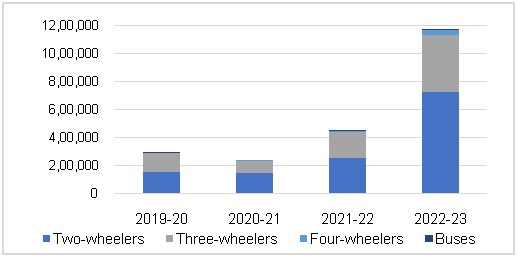
The adoption of electric vehicles (EVs) in India is consistently growing with total annual sales reaching around 1.2 million units in 2022-23. This upward trajectory is particularly pronounced in the electric 2-wheeler (E2W) and electric 3-wheeler (E3W) segments, as shown in Figure 1. The impetus behind this surge can be attributed to the comprehensive policy measures implemented by the government.

To boost demand and support charging infrastructure, the government has introduced schemes like FAME-2, offering incentives, tax waivers, and subsidies for EV charging stations. Efforts are also underway to promote local manufacturing through schemes such as the Advanced Chemistry Cell Production Linked Incentive (PLI), Auto and Auto Component PLI, and the Phased Manufacturing Program for EV components. Several States are aligning their policies to incentivize EV production and provide other benefits for EV penetration.

Figure 1. EV Sales Registered in India
Source: Vahan Dashboard

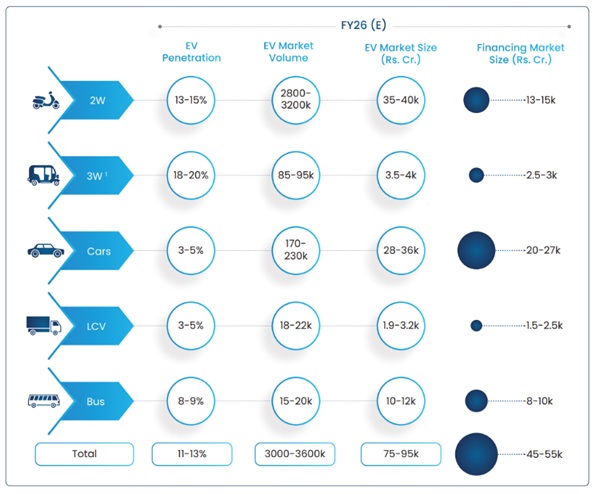
Figure 2. EV Financing Estimated Market in India

[1]Driving Affordable Financing for EVs in India, 2023

As per the recent report published by NITI Aayog and BCG, the overall outlook for EV volumes in India is optimistic, with projections indicating a growth to 30-35 lakh units by 2026 (although quite ambitious), primarily driven by increased adoption in the 2W segment as shown in Figure 2. The EV financing market is expected to prosper, reaching INR 45-55 thousand crore by 2026, reflecting the anticipated growth in the sector.Despite these positive developments, affordable financing remains a key factor and challenge for faster EV adoption.

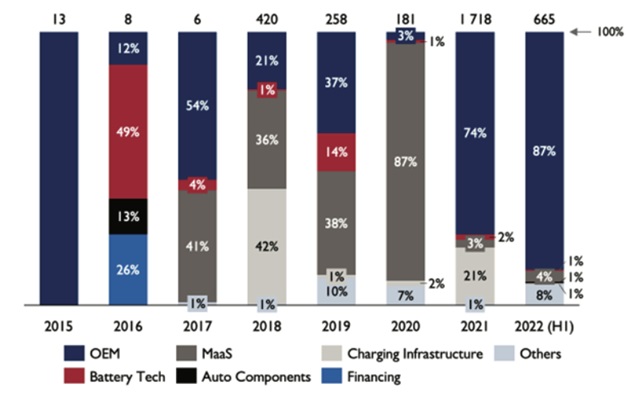
Figure 3. PE/VC Investment in the e-Mobility Sector in India

[2]Investment Landscape of Indian e-Mobility Market, 2023

[3]Mobilising finance for EVs in India

EV financing in India has seen a growing trend where various investment mechanisms are being executed from grants, commercial loans, concessional loans, grants, etc. These investments are provided by various financing entities, primarily dominated by private equity (PE)/ venture capital (VC). They contributed around $13 million in 2015, and even after an economic slowdown investment into the Indian EV sector hit $906 million[1], as shown in Figure 3. Sector-wise, Original Equipment Manufacturers (OEMs) dominate funding, especially industry leaders like Tata Motors, Hyundai, and Mahindra, receiving major investments. Charging infrastructure and battery swapping has attracted substantial capital, which is important for addressing range anxiety. Mobility as a Service (MaaS) has gained investor interest due to recurring revenue potential. Battery development and manufacturing, initially limited, are growing as technology-forward models emerge, and the government pushes for localization.

In addition to this, various banks have made recent developments with a particular focus on loans for EVs, notably in the e-3W and e-4W segments. For e-rickshaws, financial institutions such as IndusInd Bank, Ujjivan Small Finance Bank, Bank of India, and Punjab National Bank have taken strides by offering dedicated loans. These loans come with distinctive features, including collateral-free options, appealing interest rates, and high Loan-to-Value (LTV) ratios. In e-4W, the State Bank of India (SBI) took a pioneering step by introducing the Green Car Loan in April 2019[2]. This specialized product for e-cars aims to support shared mobility services like ride-hailing. The SBI Green Loan incorporates a 20 basis points discount on existing car loan interest rates, a waiver of processing fees for the initial six months, an extended repayment period of up to eight years, and an elevated LTV ratio of 90 percent. These measures are designed to make electric car financing more appealing.

Even though India has made and is continuing to make significant progress in increasing investments in the EV sector through unique financial models, it still encounters challenges in attaining its 2030 objective of achieving a 30% penetration rate of electric vehicles (EVs). Both funders and companies seeking investment in the Indian EV sector perceive numerous risks and challenges.

Key challenges and risks for Investors and funders when considering funding for EV technology in various segments, including original equipment manufacturers (OEMs), charging infrastructure manufacturers and developers, and battery manufacturers:

  1. Information Asymmetry: The nascent nature of the EV sector has resulted in information asymmetry between investors and investees, limiting investment in innovative companies.
  • Investors require clearer insights into EV tech, support for project pipelines, and advisory assistance
  • Approximately 33% of climate financiers face challenges due to their limited knowledge of the electric mobility field, which restricts deal flow and opportunities.
  1. Perceived High Risk and Longer Investment Horizon: Investors/ Funders exhibit hesitancy due to the perceived risks associated with rapidly evolving EV technology and the extended timeline for returns.
  • Pressure on returns is exacerbated by the longer investment horizon required for this sector.
  • To foster sector growth, patient capital is vital, akin to the approach in the defense and aerospace industry. Investors should prioritize innovation and reliability over short-term gains.
  1. Asset Valuation Complexity: Valuing assets in the EV sector is complex, primarily due to uncertainty regarding the lifespan of EVs and their components. High costs of capital prevail as financiers struggle to determine asset values.
    • The absence of clarity on the salvage value of components and the lack of a secondary market for EVs further exacerbate this issue
    • In India, where non-standard climate and road conditions prevail, predicting useful life becomes even more challenging
    • Charging stations face particular difficulties, including uncertain demand, low cash inflows relative to high setup costs, and still not a sustainable business model

Key challenges and risks for companies seeking funds/investment and for end-users considering EVs include:

  1. Unfavorable Macroeconomic Environment: The current global environment of rising interest rates has diminished investor interest in the EV sector.
    • Start-ups in the sector have found it challenging to raise funds despite the sector’s potential
  2. High-Interest Rates Affecting End-User Adoption: Domestic interest rates for EVs are notably higher compared to internal combustion engine (ICE) vehicles.
    • The cost of capital for 2-wheelers and 3-wheelers is exceptionally high, ranging from 35% for drivers to 18% for fleet owners
    • For mobility-as-a-service, the cost of capital falls in the range of 18-22%, making it less attractive to end-users
  3. Limitations in financing options: End-user adoption faces additional obstacles due to less favorable financing terms, including reduced loan-to-value ratios for EVs and shorter repayment periods, along with limited financing options to select from.
    • Commercial EVs often come with short loan tenures of three years, while ICE vehicles typically have longer eight-year tenures
    • Shorter repayment periods result in higher equated monthly installments, making EV loans significantly more expensive for end-users
    • Limited participation from the banking sector in India adds to the challenge, with only a few banks offering specialized products for the EV sector, primarily in the e-rikshaw segment