


Given the prevailing state of climate change, all sectors, even those resistant to decarbonisation, must swiftly transition to electric alternatives. Skeleton’s Super Battey and CATL battery swapping technology solutions may be the answer to one of the few challenges in the electrification of mining equipment.
Mining, a cornerstone of our global economy, is a catalyst for innovation and growth, supplying the essential resources that power diverse industries. Minerals like copper and aluminium serve as integral components in emerging renewable technologies. As the Green Technology & Sustainability Market anticipates exponential expansion, the significance of mining amplifies. As projections indicate exponential growth in the Green Technology & Sustainability Market, the role of mining becomes even more pivotal. To meet the demands of the future, the mining sector is set to play a crucial role in providing minerals like graphite, lithium, and cobalt, which could experience a nearly 500% increase by 2050.
The push towards sustainability and mine electrification is gaining momentum, and many mining companies are exploring ways to reduce their carbon footprint and improve safety and health outcomes for workers. The complexity of mining raw materials necessitates a multifaceted approach, employing a diverse array of techniques and equipment across various extraction phases, tailored to the unique characteristics of each material. The implementation of electric drills to penetrate rock formations, electric vehicles for efficient material transportation, and electric conveyor systems for streamlined operations underscores the industry’s commitment to sustainable practices.
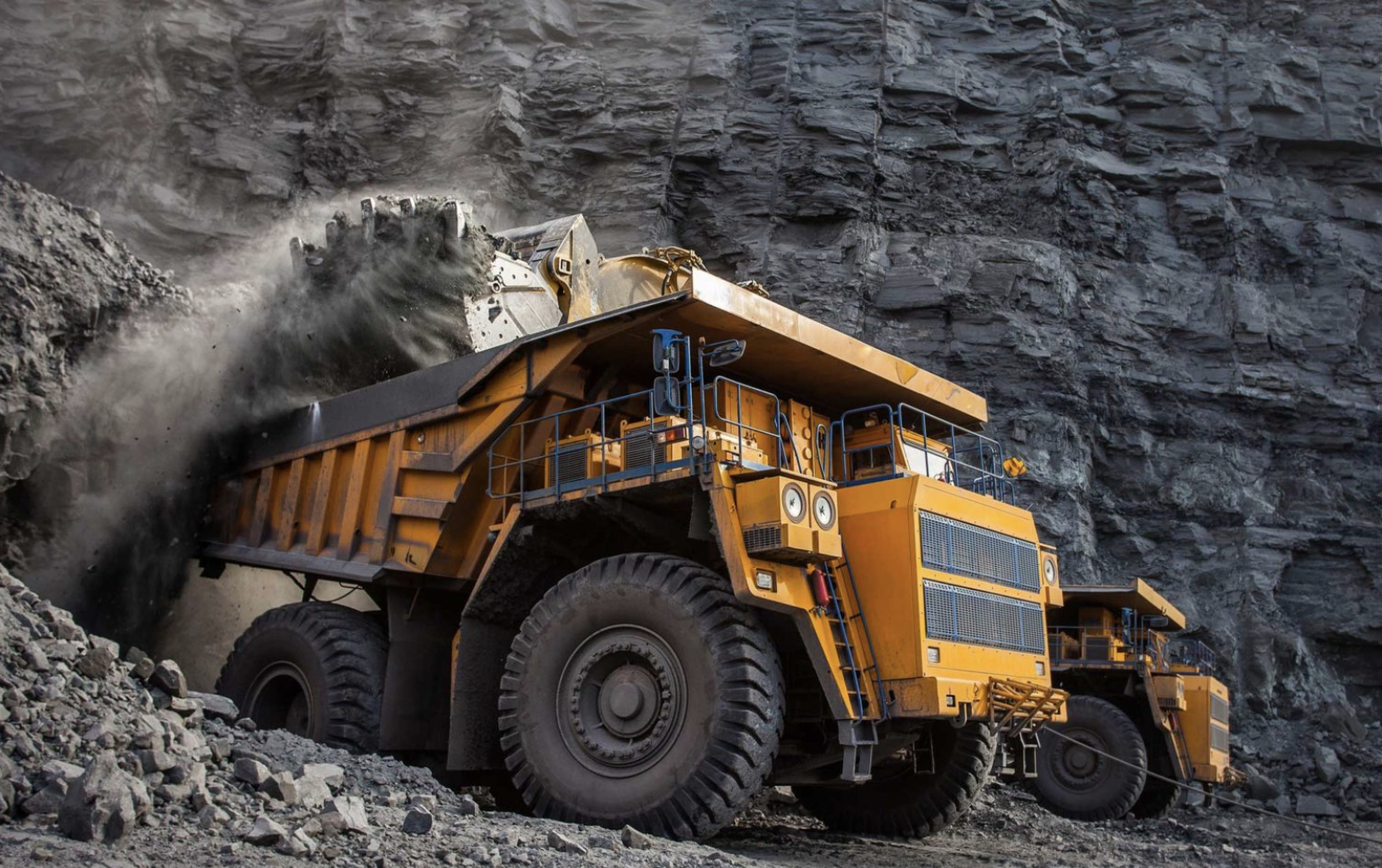
The mining landscape features a spectrum of heavy equipment that ensures efficient on and off-road operations:
- Large Mining Trucks: Facilitate the movement of materials within surface mines.
- Hydraulic Mining Shovels: Specialised in digging and scooping
- Dozers: Instrumental in raking and land preparation
- Rotary Drill Rigs and Rock Drills: Crucial for creating essential holes
- Motor Graders: Precise grading and levelling operations
- Draglines: Efficiently removing exposed materials
- Wheel Tractor Scrapers: Integral in earth-moving and levelling
- Underground Mining Loaders and Trucks: Facilitate digging operations beneath the surface
- Large Wheel Loader: Used to load materials onto trucks for transport
The primary challenge facing the mining industry soon lies in rendering these processes emission-free. However, avenues for precise and effective advancement in this domain are limited. Presently, diesel-based trucks and machinery are the norm in mining operations. The electrification of mining equipment poses complex challenges, demanding collaboration among tech developers, mining firms, and regulators. Ensuring electric equipment durability and safety in harsh conditions is intricate, along with meeting safety standards in hazardous environments.
One notable challenge is the non-stop nature of mining operations, demanding uninterrupted operation. CATL proposes battery swapping, exemplified by their 120-ton electric mining dump truck equipped with CATL batteries, showcasing extended operation without frequent charging. Companies like Skeleton Technologies developed SuperBattery in partnership with Shell, providing an end-to-end electrification system for cleaner mining. This innovation combines ultra-fast charging, in-vehicle energy storage, power provisioning, and microgrids, aiming to rival diesel-powered efficiency.
Skeleton’s SuperBattery amalgamates supercapacitor and battery attributes, aiding decarbonization in heavy industries, including mining. This advancement promises to reshape energy dynamics, benefiting mining operations and more.
Given the prevailing state of climate change, all sectors, even those resistant to decarbonisation, must swiftly transition to electric alternatives. Achieving this necessitates technologically advanced solutions, robust infrastructure development, and enhanced incentives for companies to tackle these challenges.
Climate hazards amplify operational challenges, while decarbonisation efforts reshape commodity demand. Mining’s journey towards sustainability mandates preparedness for climate-related challenges. The convergence of deep decarbonisation and renewable energy sources presents a transformative opportunity, mirroring the industry’s commitment to carbon neutrality.
Global Deployment and Challenges
Countries like India, the USA, and Australia host significant mining equipment deployments. The electrification efforts are gaining traction in Panama, Zambia, Sweden, and Namibia. However, challenges persist, including the transition from diesel to Battery Electric Vehicles (BEVs)[4] and access to renewable energy sources.
Although the adoption of BEVs has been slower in mining compared to the automotive sector, the opportunity for industry-wide electrification remains substantial. The industry’s potential for emission reduction through electrification aligns with broader sustainability goals. Decarbonisation and investment in electrified equipment are pivotal steps toward achieving climate targets. Adopting a long-term perspective, mining companies must strike a balance between sustainability, profitability, and resilience. As technology advances, electrification emerges as a key pathway to a greener, more resilient future for mining.
The industry, aspiring for global net-zero by 2050, embodies significant potential for targeted decarbonisation strategies. The move toward electrification, though slower than the automotive sector, marks an opportunity for the mining industry to champion a tailored transition.