Before most residents wake, urban freight is already keeping the city moving. Trucks deliver vegetables to wholesale markets, light commercial vehicles (LCVs) replenish retail stores, three-wheelers (3Ws) supply neighbourhood businesses, and two-wheelers (2Ws) carry food, medicines and parcels to customers. Throughout the day, construction materials, industrial products, waste, groceries and e-commerce packages continue to move between warehouses, markets, businesses and homes.
This largely invisible network keeps cities functional. It also consumes fuel, occupies road space, creates noise and releases pollutants close to where people live and work. As cities grow and consumers demand faster deliveries, freight operators will place more vehicles on roads that are already congested.
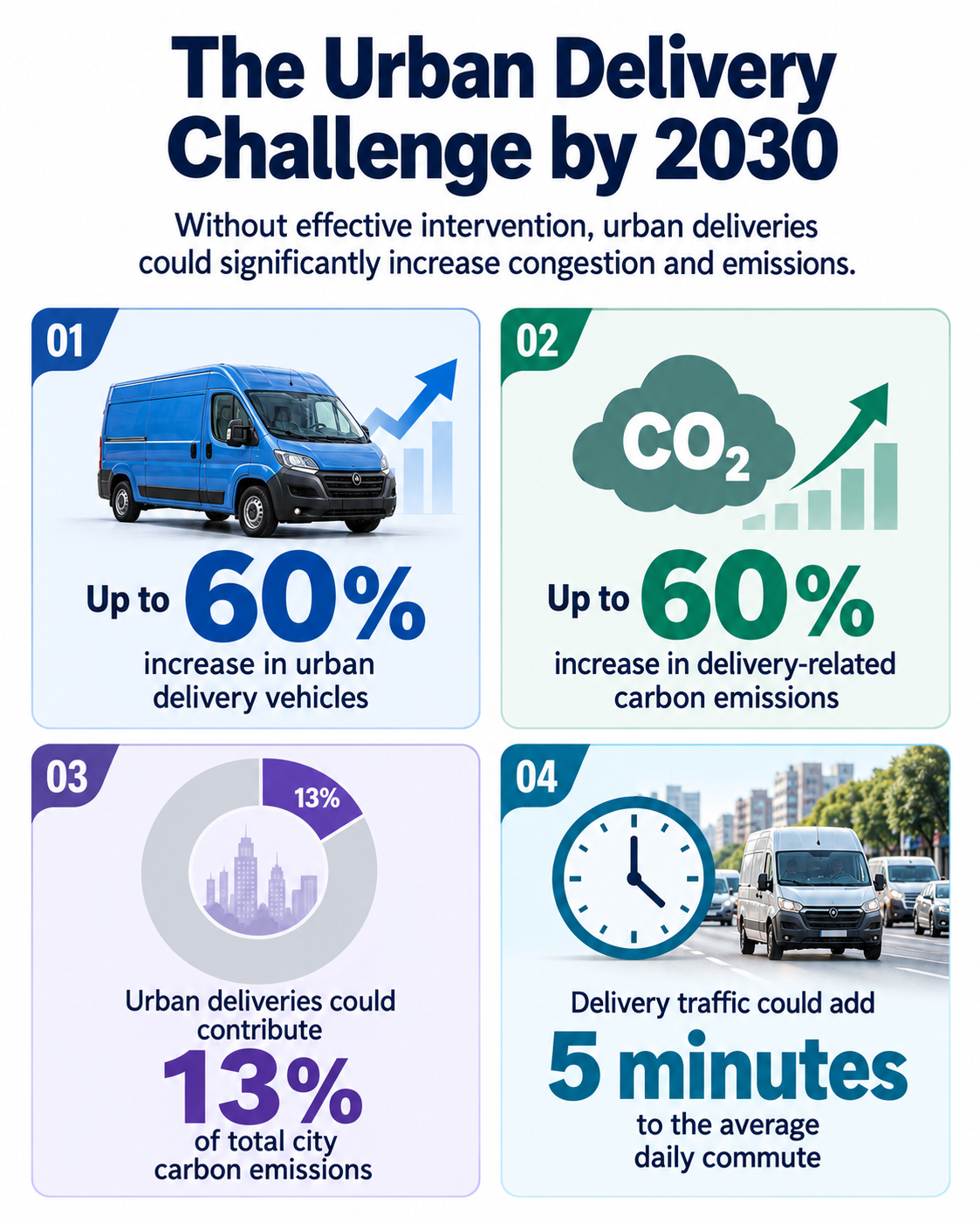
The World Economic Forum estimates that, without effective intervention, urban delivery vehicles and their carbon emissions could each rise by as much as 60% by 2030. Urban deliveries could then account for around 13% of a typical city’s carbon emissions, while additional delivery traffic could add about five minutes to the average daily commute.[1]
Cities therefore face a clear choice: (i) allow freight demand to lock in more fossil-fuel vehicles, or (ii) use electrification to build a cleaner, quieter and more efficient goods-movement system.
Electric urban freight markets are scaling at different speeds
The global EV transition has moved beyond passenger cars. Fleet operators now deploy electric 2W (e-2W), e-3Ws, e-LCVs and e-trucks across urban deliveries, logistics operations, industrial routes and commercial services. Yet each segment has reached a different stage of market maturity. China leads e-truck and e-2W deployment, Europe drives e-LCV growth, and India anchors the global e-3W market[1].
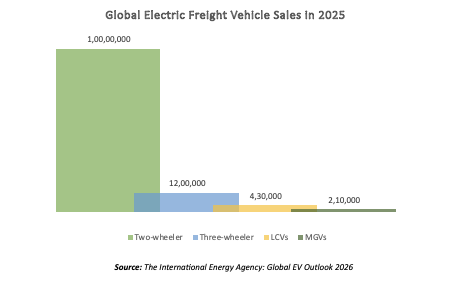
Note:The IEA totals for e-2Ws and e-3Ws include passenger and personal-use vehicles as well as commercial application. LCVs and MGVs figures refer to commercial freight-vehicle categories
e-2Ws and e-3Ws have reached scale
e-2Ws and e-3Ws remained the most electrified road-transport categories in 2025. Together, they recorded approximately 11 million sales, nearly 15% more than in 2024 and represented around 15% of total global 2W and 3W sales. Electric models also accounted for roughly 10% of the global 2W and 3W fleet.
e-2W sales increased by 15% to almost 10 million vehicles, giving electric models around 14% of the global market. China sold more than 7 million units, India sold slightly fewer than 1.3 million and Vietnam more than doubled sales to about 735,000. African sales also expanded from fewer than 1,000 vehicles in 2020 to around 70,000 in 2025, supported by ride-hailing, delivery services, battery swapping and flexible repayment models.
e-3W achieved deeper market penetration. Global sales exceeded 1.2 million vehicles even as the overall 3W market contracted, lifting the electric share above 25%. India led with almost 800,000 sales and an electric share close to 70%, while China, India and Türkiye together accounted for more than 95% of global electric three-wheeler sales.[1]
[1] The IEA’s two- and three-wheeler totals include passenger and personal-use vehicles as well as commercial fleets. They should not be read as freight-only sales. However, this scale of adoption expands vehicle supply, financing options, service networks and charging or swapping ecosystems that cities can adapt for last-mile freight
Electric LCVs and MGVs are entering the next growth phase
LCVs already serve parcel delivery, retail distribution, municipal services and small-business logistics. Global e-LCV sales exceeded 430,000 vehicles in 2025, increasing by about 45%. Europe became the largest market with nearly 200,000 sales and doubled its electric share to 10%, while China sold about 140,000 units and reached a 14% share. India’s market grew by more than 50% to over 9,000 vehicles, but electric models still represented only around 1% of LCV sales.
MGVs offer the next major opportunity for larger urban distribution operations. The IEA recorded approximately 210,000 e-MGVs sales in 2025 which is 65% more than in 2024, raising their global sales share from around 6% to 9%.
China accounted for more than 90% of global e-truck sales and concentrated deployment in ports, mines, industrial hubs and utility operations where predictable routes and centralized charging support high utilization. Europe and North America recorded smaller markets, but MGVs drove much of their growth because depot access, shorter duty cycles and manageable charging requirements make them a practical entry point for fleet electrification.
Across the freight chain, the market signal is consistent, electrification scales fastest where suitable vehicles, predictable routes, high utilization, reliable charging, supportive regulation and viable finance converge. e-2Ws and e-3Ws have already demonstrated scale, e-LCVs and e-MGVs now extend the opportunity into warehouse replenishment, retail distribution and movement between urban logistics hubs.
Why urban operations create a strong case for electrification
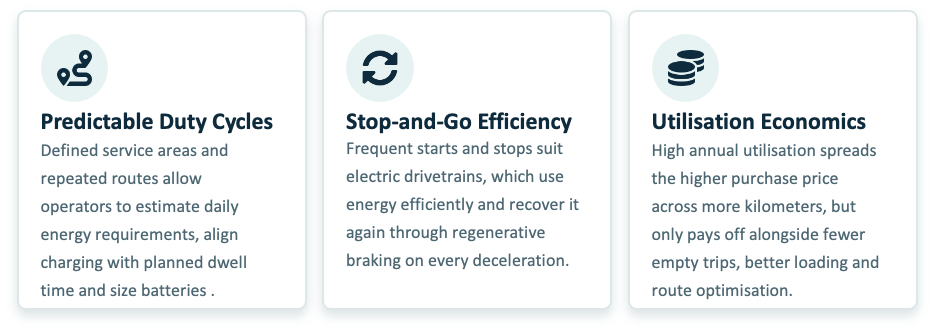
Urban freight operations offer a strong case for electrification because freight vehicles follow predictable routes, operate in stop-and-go conditions and accumulate high annual mileage. These characteristics support efficient battery sizing, regenerative braking and greater lifetime cost savings. However, cities must combine vehicle electrification with better loading, route optimisation, shipment consolidation and right-sized vehicles to reduce both emissions and unnecessary freight movement.
From market opportunity to implementation
The global market has already demonstrated that EVs can serve a growing range of urban freight operations. e-2Ws and e-3Ws have achieved scale, while LCVs and MGVs increasingly support larger distribution tasks. The next challenge lies in building the transport, charging, energy, financing and policy ecosystem required to convert this momentum into a city-wide transition.
pManifold’s work in urban freight electrification responds directly to this need. Through city-level freight assessments, vehicle and charging analysis, financial modelling and implementation planning, pManifold supports governments and industry stakeholders in identifying where electrification can work first and how it can scale commercially.
Corporate climate action has undergone a fundamental transformation over the last decade. What began as a race to announce ambitious net-zero commitments has become a test of whether those commitments can be translated into credible, measurable, and financially viable pathways. Investors, regulators, lenders and corporate boards are no longer asking whether organizations have climate targets, but whether those targets are supported by robust governance, implementation strategies, capital allocation, and clear mechanisms for accountability.
This shift reflects mounting concern over greenwashing, implementation gaps, and the financial risks of an uneven transition. Stakeholders no longer take a company’s climate goals at face value, but they want to know how those goals will be governed, funded and delivered.
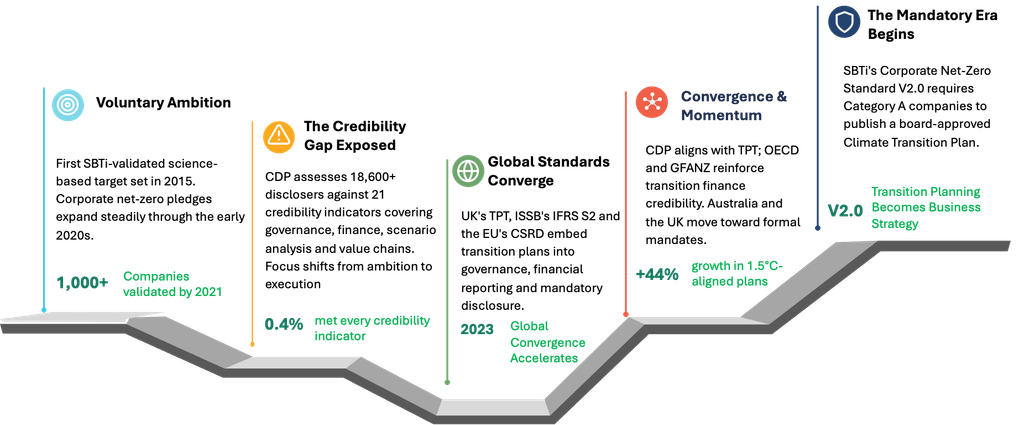
The changing landscape was visibly reinforced in June 2026, when the Science Based Targets initiative (SBTi) released the Corporate Net-Zero Standard V2.0. It was the first time the standard required large companies to publish a board-approved Climate Transition Plan as a core component of credible net-zero action, rather than an optional supplement to target-setting (Science Based Targets initiative, June, 2026). The revision came against the backdrop of mounting evidence that corporate ambition was not being matched by implementation. CDP’s assessment of more than 18,600 disclosing companies found that only 81 organizations just 0.4% (CDP, Feb 16th 2023), had developed a transition plan that met its credibility benchmark.
The significance of this development extends far beyond a single framework. These expectations are being reinforced across a growing set of frameworks like the OECD’s guidance on transition finance, the UK’s Transition Plan Taskforce (TPT), IFRS S2 and the EU’s Corporate Sustainability Reporting Directive (CSRD). The question moved for companies from target setting to how those targets will be achieved, governed, financed and demonstrated.
When Climate Ambition Was No Longer Enough
Corporate commitment to climate action has expanded rapidly over the past decade, reflecting growing recognition of climate-related risks and the increasing alignment of businesses with global net-zero ambitions. By January 2026, eleven years after the SBTi validated its first science-based target more than 10,000 companies had done the same. This momentum continued through 2025, with validated targets rising 40% and net-zero commitments 61%. Asia accounted for more than half of this growth (53% of validated targets), led by China, Japan and India (Science Based Targets initiative, April 9th 2026). These trends indicate that science-based target setting has become an integral component of corporate climate strategy rather than a niche sustainability exercise.
However, the rapid growth of targets has also exposed a more fundamental challenge. While organizations have become increasingly successful in setting ambitious targets, very few have demonstrated how those targets will be achieved. CDP’s 2022 assessment found that fewer than 1% of disclosures met all 21 credibility indicators for a Climate Transition Plan spanning governance, financial planning, scenario analysis and value chain engagement. Although roughly 2,300 companies disclosed against most of these indicators, significant gaps remained (CDP, Feb 16th 2023). Independent academic analysis in 2023 reached a similar conclusion, reporting that fewer than 0.6% of more than 23,200 disclosing companies had developed credible transition plans, while over 80% had yet to establish science-based targets (Nicolajsen et al., 2025). The implications of this credibility gap extend well beyond corporate reporting. As businesses continued to strengthen climate commitments, investors, lenders, regulators and standard-setting bodies simultaneously developed disclosure frameworks, transition finance taxonomies, benchmarking initiatives and regulatory requirements to distinguish credible implementation from aspirational commitments. Consequently, the focus of corporate climate action has shifted from announcing long-term targets to demonstrating credible, financeable and accountable pathways for achieving them. It is this shift from ambition to implementation that has placed Climate Transition Plans at the center of emerging climate governance.
The Global Convergence Around Climate Transition Planning
The increasing prominence of Climate Transition Plans reflects a broader convergence across regulators, standard setters, investors, and financial institutions on how climate commitments must be supported by credible governance, implementation pathways, financial planning, and measurable accountability.
This convergence became evident in 2023. The UK’s Transition Plan Taskforce (TPT) established a structured disclosure framework centered on ambition, action, and accountability. The ISSB’s IFRS S2 embedded transition plans within global sustainability reporting, linking them to governance, financial reporting, and scenario analysis, while the EU’s Corporate Sustainability Reporting Directive (CSRD) integrated transition planning into mandatory corporate sustainability disclosures. Beyond regulation, CDP aligned its disclosure framework with TPT and recorded a 44% increase in companies disclosing 1.5°C-aligned transition plans by mid-2024, reaching 5,906 organizations (CDP, Jun 19th 2024). Similarly, the Organization for Economic Co-operation and Development (OECD) and Glasgow Financial Alliance for Net Zero (GFANZ) developed complementary guidance to strengthen the credibility of transition finance and align corporate and financial sector transition planning.
Australia launched consultations on transition planning under its Sustainable Finance Roadmap in 2025 (Australian Government Treasury, 2024), while the UK moved towards formalizing the previously voluntary TPT framework (Department for Energy Security and Net Zero [DESNZ], 2025). Although regulatory approaches differ, the direction of travel is increasingly consistent.
At the same time, convergence should not be mistaken for uniformity. The European Union’s 2025 Omnibus I package softened CSRD’s transition plan requirement, highlighting the political limits of prescriptive sustainability regulation. Regional differences also persist, with CDP reporting that 49% of global disclosing companies had transition plans in 2025, compared with only 27% of US companies (CDP, May 22nd 2026).
For businesses, the implication is straightforward. While regulatory requirements may continue to evolve, the underlying expectations of credible Climate Transition Plans aligned with emerging global practices is likely to strengthen regulatory preparedness, investor confidence, and long-term business resilience.
What Makes a Credible Transition Plan?
Leading frameworks including TPT, ISSB, CSRD, CDP, OECD, GFANZ and SBTi have converged around a common definition of what constitutes a credible Climate Transition Plan. First, effective governance has become a foundational requirement. A transition plan is no longer treated as a sustainability-team exercise; leading frameworks now expect board-level oversight with clearly assigned executive accountability. Climate action, in other words, has become a matter of corporate governance rather than corporate reporting.
Second, this expectation extends into financial decision-making. Frameworks such as IFRS S2, TPT and CDP require organizations to demonstrate how climate commitments influence capital allocation, financial planning and investment decisions, shifting transition planning from sustainability reporting to core business strategy.
Third, credible plans must be underpinned by robust climate scenario analysis and measurable implementation pathways. The growing use of NGFS scenarios by financial regulators reinforces the expectation that transition plans stay aligned with evolving scientific evidence and external benchmarks, rather than internal assumptions alone.
Fourth, expectations now extend deeper into the value chain. SBTi’s Corporate Net‑Zero Standard V2.0 expands Scope 3 target options to include category and activity‑specific targets alongside overarching Scope 3 reduction or supplier/customer alignment targets, encouraging companies to work directly with suppliers and customers to cut emissions across the most material parts of the value chain (Science Based Targets initiative, june 2026). Lastly, credibility increasingly depends on independent verification and transparent use of carbon removals. SBTi V2.0 introduces mandatory third-party assurance for large companies (Category A) while positioning carbon removals as a complement but not a substitute for direct emissions reductions through its Ongoing Emissions Responsibility (OER) recognition program (Science Based Targets initiative, June 2026).
Collectively, a credible Climate Transition Plan integrates governance, finance, risk management, supply chain engagement, and independent assurance into a single strategic framework, making it a core business document rather than a standalone sustainability disclosure.
Why Climate Transition Plans Have Become a Strategic Imperative
The growing importance of Climate Transition Plans is reflected not only in evolving regulations but also in changing market behavior. Investors, lenders, and companies increasingly view transition plans as strategic financial instruments rather than sustainability disclosures, making their credibility central to investment decisions and corporate governance.
Unilever’s 2024 Climate Transition Action Plan illustrates this shift. The company submitted its plan to a binding shareholder advisory vote, securing over 97% support (Unilever, 16th May 2024), signaling that transition planning is now subject to the same level of investor scrutiny as executive remuneration or major capital allocation decisions. Similarly, Climate Action 100+ evaluates companies not only on emissions targets but also on whether corporate lobbying, governance, and business decisions are aligned with their published transition plans, reinforcing that implementation consistency has become a key measure of credibility.
The financial markets are sending the same signal. CDP estimates that the global cost of climate inaction could reach US$38 trillion by 2050, while investments in climate adaptation and resilience can yield up to US$21 for every US$1 invested. Companies also disclosed US$4.4 trillion in environment-related business opportunities in 2024 (CDP, August 6th 2025). These figures help explain why the OECD’s Guidance on Transition Finance treats strong transition plans as essential to the credibility of transition-labelled financial instruments and as a safeguard against greenwashing.
The situation is more challenging for the financial institutions. Unlike corporates plans, which primarily addresses operational and value chain emissions, the banks and investors must manage emissions embedded across their lending and investment portfolio. This gave rise to the development of dedicated guidance by GFANZ, now adopted by more than 675 financial institutions across 50 jurisdictions (United Nations Framework Convention on Climate Change (UNFCCC), Oct 7th 2024). As GFANZ shifts its focus towards mobilizing private capitals and scaling transition finance, the more emphasis is on moving from transitions plans to assessing whether they are sufficiently credible to support financial decisions.
Ultimately, it’s the execution which determines whether a transition plan is adding any strategic value or not. Ørsted’s 98% reduction in the emission intensity, achieved before the 2025 target (Ørsted), shows that ambitious plans can be delivered. Maersk’s redesign of its shipping network points to a similar capacity for structural change in sectors that are hard to abate. Shell’s experience cuts the other way, having targeted a 15–20% reduction by 2025, the company achieved only 9% (Kizhakedath, March 24th 2026), which shows that credibility now on measurable progress rather than the scale of the original ambition. For management, the question moved from whether a transition plan exists to whether that plan is credible enough to attract investment and financing, inform strategic choices and generate measurable outcomes.
The Future of Credible Transition Planning
The upcoming phase of transition planning is shifting from the disclosure to practical challenges of implementation, assurance and adaptation as organization begin translating published plans into long-term business decisions.
First, independent assurance is likely to become a defining feature of credibility. SBTi’s Corporate Net-Zero Standard V2.0 already introduces mandatory third-party assurance for large companies, although globally accepted methodologies for verifying forward-looking transition plans remain at an early stage. Closing this gap is likely to become a priority for auditors, consultancies and standard setters as they work towards more consistent approaches to assessing implementation and progress.
Second, regional adaptation will become increasingly important as transition planning expands into emerging markets. Most existing guidance has been shaped by the regulatory systems and corporate structures of Europe and other developed economies, yet Asia, especially India, is now the fastest-growing region for science-based target adoption. Applying established approaches across different governance models, financing conditions and regulatory environments will require greater localization, creating demand for guidance that reflects the realities of emerging economies rather than simply replicating developed-market practice.
Finally, transition planning is beginning to extend beyond carbon. GFANZ has signaled a stronger focus on nature-related risks, including biodiversity, land use and water, and the Taskforce on Nature-related Financial Disclosures (TNFD) integrates directly into this agenda. TNFD’s disclosure recommendations surpassed 733 organizations and USD 22 trillion in AUM by late 2025 ( TNFD, 7th Nov, 2025). The NGFS, is expected to release updated climate scenarios by the end of 2026. As scientific understanding and policy expectations continue to evolve, organizations will need to revisit their transition pathways more regularly rather than treating them as static, long-term commitments.
Taken altogether, the development suggests that the transition plan is entering in the more mature phase where the challenge is no longer to produce a plan but to keep it credible, adaptable and capable of guiding strategic decision in an increasingly complex environment.
From Commitment to Credibility
A well-designed transition plan now influences strategic decisions on investment, risk management, operations, and corporate governance, making it an increasingly important indicator of long-term business resilience. As expectations continue to evolve, organizations will be judged less by the ambition of their commitments than by their ability to execute them consistently and transparently.
The transition to a low- carbon economy is already underway. The organization that will lead it will not necessarily be the one that announces the most ambitious goals, but the one that can demonstrate a credible, adaptable and investment pathway for achieving them.
Climate finance has become one of the most important enablers of global climate action. Countries require large-scale capital to shift from fossil-fuel-based systems towards low-carbon, climate-resilient and inclusive development pathways. Climate finance does more than fund assets. It reduces investment risks, supports new business models, strengthens institutional capacity and helps governments and private players move climate solutions from pilot scale to market scale. Several international climate finance institutions support this transition such as Green Climate Fund (GCF), Global Environment Facility (GEF), Adaptation Fund, Climate Investment Funds (CIF), others. The GCF has emerged as one of the world’s largest dedicated climate funds to enable low emission, climate resilient development pathways in developing countries.
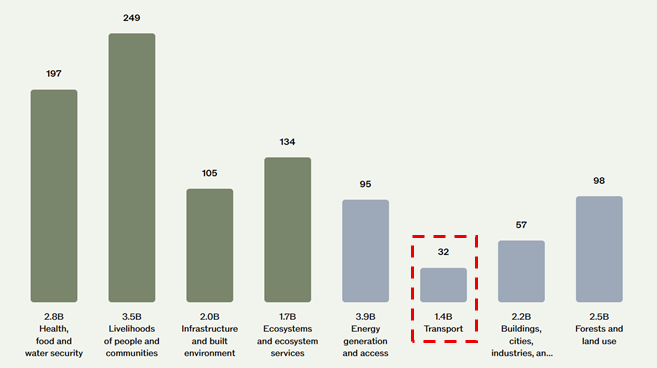
Over the years, GCF has supported mitigation, adaptation and cross-cutting projects across Health, food and water security, Livelihoods of people and communities, Infrastructure and built environment, Ecosystems and ecosystem services, Energy generation and access, Transport, Buildings, cities, industries, and appliances and Forests and land use. It maintains a 50:50 allocation[1] objective between mitigation and adaptation and direct at least half of adaptation finance towards Least Developed Countries, Small Island Developing States and African States. In total, GCF has approved nearly 350 projects and has committed around USD 20.1 billion (disbursed ~USD 6.8 billion) in resources and mobilised an amount of around USD 59.8 billion as co-financing[2]. Within this portfolio, transport has become an important sector for GCF because it remains one of the fastest-growing sources of greenhouse gas (GHG) emissions in developing economies. The sector has received around USD 1.4 billion (as shown in figure) in funding and supported a range of low-emission public transport, transport electrification, non-motorised transport, transit-oriented development and climate-resilient transport infrastructure.
e-Mobility has emerged as a focused and fast-growing investment theme within the transport sector. GCF has supported at least five dedicated e-mobility programmes (as shown in table) These five programmes account for ~USD 778.5 million in GCF financing[3].
GCF has mobilized nearly USD 3 billion in total investments through its e-mobility portfolio including ~USD 778.5 millions of direct GCF financing across multiple regions in Asia, Latin America and the Caribbean. This financing mix highlights that GCF extends beyond grant funding. The fund strategically combines concessional loans, equity investments and grant support to de-risk investments, mobilise private capital, improve project bankability and accelerate the commercial-scale deployment of electric mobility solutions across emerging markets.
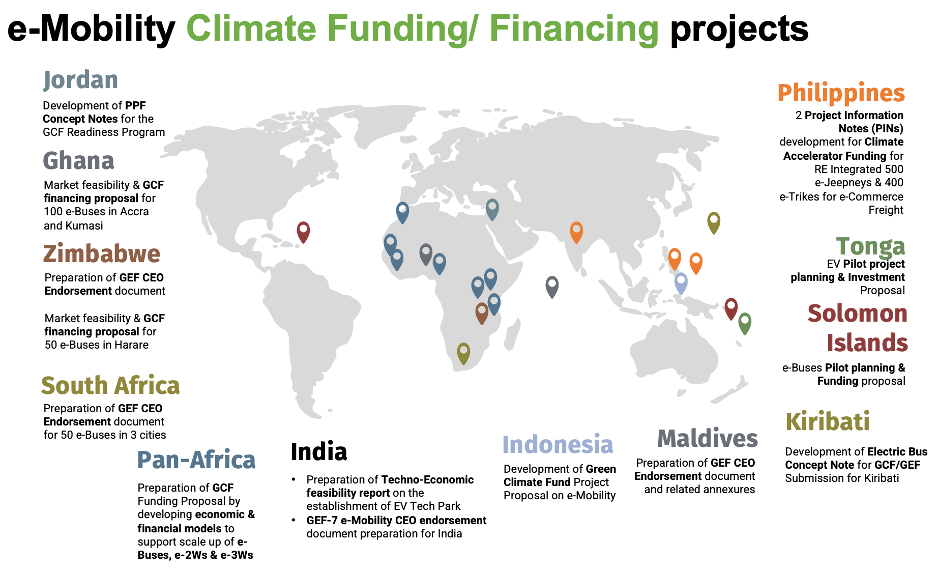
This growing role of GCF in e-mobility is closely aligned with pManifold’s work in climate finance and transport decarbonisation. pManifold recently supported the preparation of a full GCF funding proposal for an electric bus transition programme in a Southeast Asian country. The programme was structured around an e-Bus Financing Facility for urban public transport electrification and aimed to accelerate the deployment of 2,700 e-buses (across different sizes) and associated charging infrastructure. The proposal outlined a total project size of USD 240 million comprising USD 5 million for TA and USD 235 million for investment support, making it a finance-led intervention supported by policy, institutional and market development activities. The concessional loan financing instrument was designed to provide long-tenor, lower-cost capital to improve project viability, de-risk investments and mobilise private-sector participation in public transport electrification. The grant was designed to address non-financial barriers such as policy development, regulatory reform, institutional strengthening, stakeholder capacity building, market development and knowledge-sharing.
Disclaimer: This blog is based on publicly available research, industry reports, news/ articles and the author’s analysis and is intended for informational purposes only. The views expressed are solely those of the author and should not be construed as professional, financial, legal or technical advice. Where external content is used, due credit has been provided to the original source to the best of the author’s knowledge. If any content from this blog is reproduced, adapted or shared, appropriate attribution to the original author and this blog is required.
The global conversation around climate change has evolved dramatically over the last decade. Today, the challenge is no longer whether climate action is necessary it is how the world will finance it. From renewable energy projects and electric mobility infrastructure to climate-resilient agriculture and adaptation programs, climate finance has emerged as one of the most powerful enablers of economic transformation. Governments, investors, corporations and development institutions are now mobilizing capital at an unprecedented scale to accelerate the transition toward a low-carbon and climate-resilient future. Yet despite record-breaking investments, the world remains far from where it needs to be.
The question is no longer about the availability of climate finance. The real question is: Who will be able to access it, deploy it effectively and create the next generation of climate-positive growth?
The Rise of Climate Finance: From Billions to Trillions
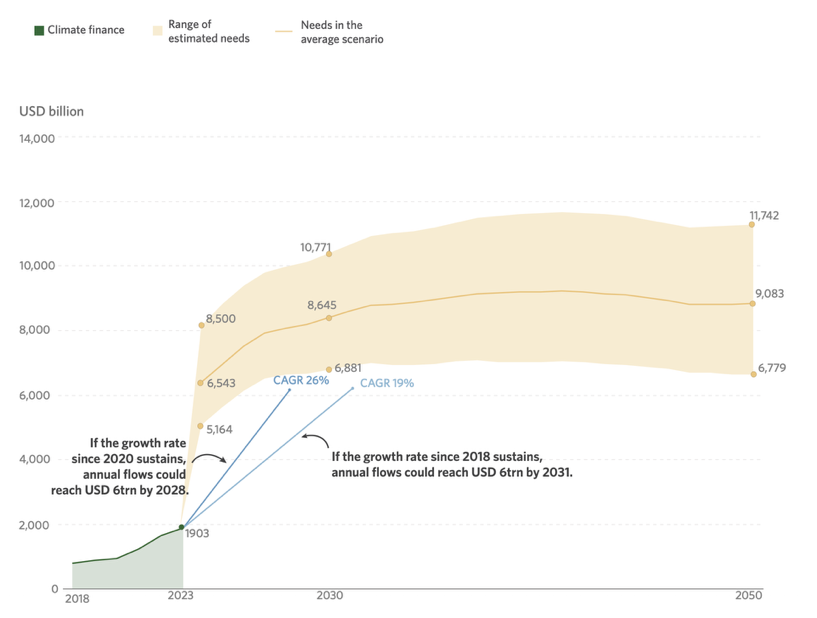
The Climate Policy Initiative (CPI) has reported in its ‘Global Landscape of Climate Finance 2025”that the global climate finance flows have increased from nearly USD 674 billion in 2018 to ~USD 1.9 trillion in 2023 (as shown in Figure), with estimates suggesting that annual investments have already crossed the USD 2 trillion mark. This growth reflects the accelerating momentum in Energy and Transport sectors which are the highest recipients of climate finance, followed by other sectors such as Buildings & Infrastructure, AFOLU, Sustainable buildings, Nature-based solutions and adaptation projects. However, this success story comes with an important caveat.
The report also estimates that achieving global climate goals will require between USD 6 trillion and USD 11.7 trillion annually over the coming decades. In other words, current investment levels while reaching an all-time high still needs to be much higher to keep global warming within manageable limits and build resilience against increasingly severe climate impacts For businesses, governments and investors, this gap represents both a challenge and an opportunity. The organizations that can successfully navigate the climate finance ecosystem will be positioned to unlock significant capital flows and long-term growth opportunities
Why Climate Finance Has Become a Strategic Business Imperative
Historically, climate investments were viewed as compliance-driven expenditures or sustainability initiatives. Today, they are increasingly recognized as drivers of economic competitiveness, industrial growth, energy security and investment returns. Renewable energy, electric mobility, climate-resilient infrastructure and sustainable supply chains are attracting unprecedented levels of capital, reshaping industries and creating new avenues for growth. In markets such as China, clean-energy industries already contribute more than 10% of GDP, demonstrating how climate-focused investments can become powerful economic engines rather than cost centers.
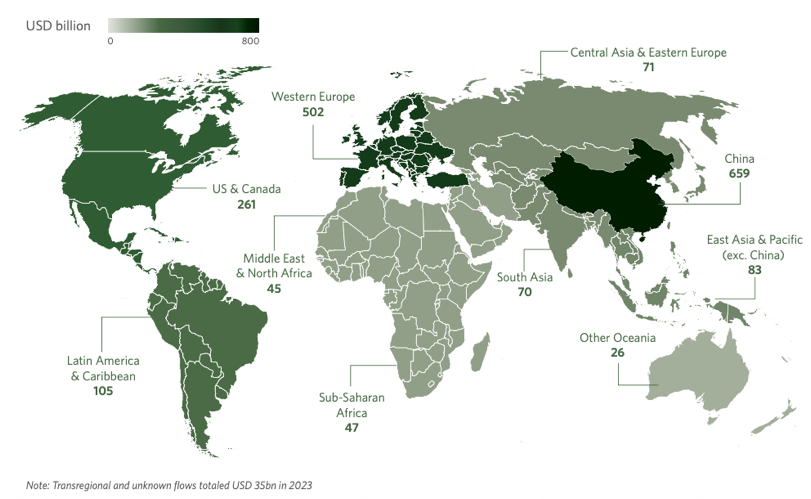
At the same time, climate finance is becoming a key indicator of a region’s ability to attract investment and accelerate industrial transformation. Between 2018 and 2023 as shown in Figure 2, nearly 79% of global climate finance was concentrated in three regions (darker green shade) i) East Asia and the Pacific ii) Western Europe and iii) the United States and Canada highlighting a growing divide between capital-rich and capital-constrained markets. East Asia and the Pacific alone accounted for 39% of global climate finance, driven overwhelmingly by China. On the other hand, countries like Germany, the United States, Brazil and India emerged as the leading climate finance hubs within their respective regions.
Climate finance has evolved into a diversified ecosystem supported by public institutions, multilateral agencies, private investors, and philanthropic organizations. Governments continue to play a foundational role through climate budgets, incentives and dedicated funding programs and multilateral development and regional development banks provide concessional financing, guarantees, and technical assistance to de-risk investments. At the same time, private capital has emerged as the largest source of climate finance, with institutional investors, infrastructure funds, private equity firms and corporations increasingly directing capital toward these technologies.
The climate finance landscape is also being strengthened by a broad range of financial instruments tailored to different project needs and risk profiles. These include grants, concessional loans, green and sustainability-linked bonds, equity investments, risk guarantees, blended finance structures, project level Market rate debts and carbon market mechanisms. Increasingly, these instruments are being combined to enhance project bankability, reduce investment risks and attract larger pools of institutional capital, enabling the scaling of climate and sustainability-focused investments.
Looking Ahead: The Next Decade Will Define the Climate Finance Landscape
The climate finance landscape is entering a period of unprecedented growth, driven by stronger government commitments, expanding climate-focused lending from development finance institutions and increasing participation from institutional investors. At the same time, innovative financing mechanisms and blended capital structures are improving project bankability and accelerating investment flows into low-carbon and climate-resilient sectors. The funding availability continues to expand, organizations that can develop robust climate strategies, build investment-ready projects and effectively navigate the evolving financing ecosystem will be best positioned to unlock new growth opportunities.
pManifold’s Climate Finance Portfolio
pManifold is a leading consulting and advisory firm focused on e-mobility, climate finance, new energy, transport, green hydrogen and carbon markets. Headquartered in Nagpur, India, it has delivered 400+ projects globally, including 200+ e-mobility and 15+ climate finance assignments across developing regions. Its climate financing practice has been developed through sustained engagement with multilateral climate funds, development finance institutions and international donors. Our expertise spans the entire climate finance lifecycle, from concept development and readiness support to fund structuring, financial instrument design and mobilization. Key service areas include:
Climate Funds Access & Proposal Design: End-to-end support for climate finance access, including concept note development, readiness support, funding proposal preparation and donor engagement
Techno-Commercial Due Diligence: Evaluation of technologies, business models, market readiness, commercial viability and investment potential of projects and programmes
Project Structuring & Bankability Support: Design of investment-grade projects, financial frameworks, implementation models and bankability assessments to attract public and private investment
Blended Finance & Capital Mobilization: Structuring of concessional finance, guarantees, viability gap funding, matching grants and PPP mechanisms to mobilize capital for sustainable development projects
Modelling of Financing Instruments and Their Impact: Financial modelling and assessment of financing instruments, including analysis of leverage, risk allocation, affordability and climate impact
Policy & Regulatory Advisory: Analysis and design of policy instruments, incentive mechanisms, pricing frameworks, green taxonomies and regulatory measures to accelerate market development
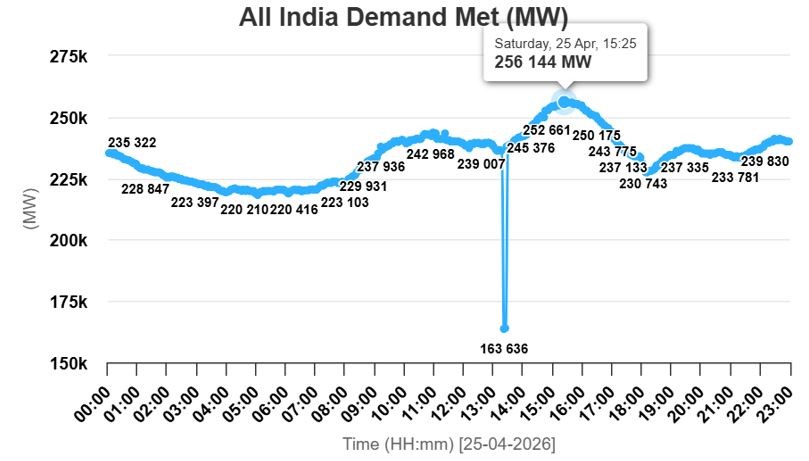
India’s power system crossed a historic milestone on 25 April 2026, when national peak electricity demand touched 256,144 MW (256.14 GW) at 3:25 PM, (Source: Image – National Power Portal) the highest ever recorded in the country. The number itself is significant, but the real story lies deeper in what this peak reveals about the future of India’s electricity system.
For years, India’s power sector discussions were centered around one question: Can we generate enough electricity? Today, that question is changing.
The real question is now: Can India deliver electricity at the exact hour when everyone wants it?
This is the transition from an energy deficit problem to a peak deficit problem.
India may have enough installed capacity on paper, but the real stress emerges during a few critical hours, especially during extreme summer afternoons and increasingly sharp evening ramps, when cooling demand, residential consumption, EV charging and industrial load all collide. The 256 GW peak is not just a summer statistic. It is a signal that India’s load curve is being fundamentally reshaped by climate change, urbanisation, and electrification.
Why the Peak Happened Earlier than Expected: Traditionally, India’s highest electricity demand came in May or June, when summer temperatures reached their harshest levels. This year, the record came in April itself. Across North, West and Central India, temperatures crossed 42–45°C or even more, far earlier than usual. Heatwave alerts were issued across multiple states and cities in Rajasthan, Gujarat, Maharashtra, Delhi and Madhya Pradesh experienced unusually intense heat conditions.
The peak demand was recorded at 3:25 PM, which is equally important. This confirms that India’s power system is now being driven primarily by cooling demand. Afternoon peaks indicate that air-conditioning load, not just lighting or evening residential demand, which is becoming the dominant driver of electricity consumption.
If the peak had occurred at 8 PM, it would reflect lighting and household consumption. Whereas, 3 PM peak tells us something much bigger, may be India’s grid is becoming temperature-driven. Cooling is no longer a luxury. It is becoming an economic necessity
Air-Conditioning Load Explosion, one of the most important signals hidden inside the power demand data is the rise in night-time load. It is to note that 2 AM demand is one of the best proxies for incremental air-conditioning load, since industrial activity is relatively stable and cooling load becomes more visible. In early April 2026, India’s 2 AM demand stood around 190 GW. By 26 April, it had reached nearly 225 GW, an increase of nearly 35 GW in just a few weeks.
And yet, India’s household AC penetration is still only around 9–10%. According to NITI Aayog projections, this could rise to 65% by 2047 and nearly 80% by 2070. That means the current peak is only an early warning and this is not a temporary summer spike, but it is a structural demand transformation. As incomes rise, urbanisation accelerates and climate stress intensifies, cooling demand could become the single largest driver of India’s future electricity system.
Solar is Not the Problem, It Is Preventing a Much Bigger Crisis: There is often criticism around solar power because of the so-called “duck curve” and afternoon grid balancing challenges. But the 25 April peak tells the opposite story. Without utility-scale solar and rooftop solar generation, India would have required nearly 60 GW of additional coal capacity, over and above the existing 227 GW coal capacity, just to meet the afternoon peak. Coal generation would have needed to be 15–20% higher on a daily basis, placing enormous pressure on coal supply chains.
India’s challenge is not whether solar should expand. It is how the system manages the transition between solar-rich hours and non-solar hours.
Why BESS Matters? : Battery Energy Storage Systems (BESS) are now moving from pilot stage to mainstream. with the recent tenders for:
Standalone BESS
Solar + BESS
Firm and Dispatchable Renewable Energy (FDRE)
Pumped hydro storage
Hybrid renewable projects
show that India is finally beginning to procure flexibility, not just megawatts. But BESS alone will not solve the problem. There is a growing assumption that solar + storage can fully substitute thermal generation.
If thermal generation remains around 180 GW for 12 non-solar hours, replacing that entirely would require extremely large storage capacity. Even with 4-hour storage assumptions, the scale required becomes enormous and economically impractical in the near term.
CEA’s long-term planning models largely assume 4–6 hour storage durations. But real summer heatwave conditions, especially from mid-March to mid-May, may require much deeper analysis of longer-duration reliability.
The future grid cannot be built on the assumption that short-duration storage alone will solve summer peaks. Thus, storage is essential, but realistic planning matters.
Time-of-Use Tariffs: The Missing Reform: Perhaps the biggest policy gap today is not technology, it is pricing. Electricity is often priced almost the same at 2 PM and 9 PM, even though the system cost is dramatically different. Households continue to concentrate consumption during expensive peak hours because the tariff does not reflect the real cost of supplying that electricity.
India now urgently needs Time-of-Use (ToU) tariffs, especially for:
Urban residential consumers
EV charging
High-load commercial users
Distributed cooling demand
Residential charging an EV at midnight or shifting appliances to solar hours should see a lower bill. A DISCOM investing in BESS should also have price signals that reduce the peak it is trying to serve.
What India Must Do Next: India’s future power challenge can be addressed through a two-part strategy:
1. Build Flexibility at Scale: The goal is not just more capacity, but better response capability
Large-scale BESS deployment
Pumped storage expansion
Flexible thermal operations
Hybrid renewable procurement
Distributed solar + storage
Stronger transmission and substation upgrades
2. Build Smarter Demand: Peak demand must be managed, not merely supplied
Time-of-Use tariffs
Demand response for industries and buildings
Cooling efficiency programs
Super-efficient AC adoption
Urban heat reduction strategies
Decentralized energy systems and microgrids
Because every avoided peak megawatt is cheaper than building new peak generation.
Thus, India’s 256 GW peak is not just a new record, but it signals a shift from energy deficit to peak deficit. India now needs storage, flexible grids, Time-of-Use tariffs, efficient cooling and smarter demand management. The future of the power sector will depend less on how much electricity we produce and more on how intelligently we manage when it is consumed.
As the global steel industry accelerates its transition toward low‑carbon and net‑zero pathways, Green Hydrogen (GH₂)–based Direct Reduced Iron (DRI) has emerged as one of the most promising routes to deep decarbonisation. However, while much of the discourse focuses on hydrogen supply, electrolyser costs, and renewable power, a critical upstream enabler often receives far less attention: iron ore beneficiation.
In reality, large‑scale deployment of GH₂–DRI is not possible without high‑quality, DR‑grade iron ore. Beneficiation is therefore not a peripheral mining activity but it is foundational infrastructure for green steel.
What is Iron Ore Beneficiation?: Iron ore beneficiation increases the iron content (Fe%) and removes impurities like silica, alumina, and phosphorus to make low-grade ore suitable for steelmaking. Through crushing, grinding, and separation techniques (washing, magnetic, gravity), it enhances furnace efficiency, reduces fuel consumption, and improves metal quality.
Why GH₂–DRI demands better iron ore
Unlike the conventional blast furnace–basic oxygen furnace (BF–BOF) route, GH₂–DRI operates under much tighter material quality constraints. Hydrogen reacts selectively with iron oxides, leaving impurities untouched. As a result, ore quality directly determines hydrogen efficiency, furnace stability, and steel quality. Typical GH₂–DRI plants require:
Iron content ≥67% Fe
Very low levels of silica (SiO₂) and alumina (Al₂O₃)
Tight control of phosphorus, sulphur, and alkalis
Most run‑of‑mine iron ores, especially in emerging economies do not meet these specifications without beneficiation. Hence let’s understand why beneficiation is critical.
1. Upgrading iron content for hydrogen efficiency
One of the most direct ways beneficiation supports GH₂–DRI is by increasing the Fe grade of iron ore.
Low‑ and medium‑grade ores (55–62% Fe) contain significant gangue minerals that do not participate in hydrogen reduction. If left untreated, these impurities:
Increase the quantity of pellets required per tonne of DRI
Raise hydrogen consumption per tonne of steel
Lower shaft furnace productivity
Through crushing, grinding, and separation (gravity, magnetic, or flotation), beneficiation upgrades these ores into DR‑grade concentrates, making them suitable for hydrogen‑based reduction.
In effect, beneficiation acts as an indirect hydrogen‑saving lever, which is critical given that hydrogen is the single largest operating cost in GH₂–DRI.
2. Reducing gangue to stabilise shaft furnace operations
GH₂–DRI shaft furnaces are more sensitive to burden quality than blast furnaces. High gangue content can lead to:
Poor gas permeability
Irregular reduction behaviour
Increased sticking and clustering of pellets
Beneficiation helps produce clean, uniform concentrates, enabling the manufacture of pellets with high reducibility, controlled porosity, low swelling and degradation.
This consistency is essential for stable operation under hydrogen atmospheres, where process windows are narrower than in natural‑gas‑based DRI.
3. Impurity control becomes more critical in DRI–EAF routes
In BF–BOF steelmaking, certain impurities can be diluted or removed through slag chemistry and coke interactions. GH₂–DRI–EAF routes, however, are far less forgiving.
Beneficiation plays a key role in reducing:
Phosphorus (P) – difficult and costly to remove in EAFs
Sulphur (S – affects downstream steel quality
Alkalis and chlorides – cause operational challenges in shaft furnaces
For producers targeting automotive‑grade or export‑oriented green steel, upstream impurity control through beneficiation is indispensable.
4. Enabling pelletisation for hydrogen‑based DRI
GH₂–DRI relies almost exclusively on DR‑grade pellets, rather than lump ore or sinter. High‑quality pelletisation requires narrow chemical composition, consistent mineralogy and low variability across batches.
Beneficiated iron ore concentrates provide the necessary feedstock to produce pellets that can withstand hydrogen reduction without excessive fines generation, swelling, or breakdown.
Without beneficiation, pellet quality becomes inconsistent—posing serious risks to furnace availability and performance.
5. Unlocking low‑grade and complex iron ore resources
Future iron ore supply growth is increasingly expected from low‑grade hematite ores, magnetite ores and complex ores with high alumina and silica. Very few regions globally possess large reserves of naturally high‑grade DR‑quality ore. Beneficiation is what democratises access to GH₂–DRI, enabling countries with lower‑grade resources to participate in the green steel transition.
For countries such as India, Morocco, and several African nations, beneficiation is the bridge between domestic ore availability and globally competitive green steel production.
6. Lifecycle decarbonisation benefits
While beneficiation is energy‑intensive, its system‑level decarbonisation impact is positive:
Lower gangue reduces hydrogen consumption in DRI
Reduced slag volumes cut electricity use in EAFs
Higher yields improve overall material efficiency
When beneficiation plants are electrified and powered by renewable energy, the net lifecycle emissions of green steel decline significantly.
Strategic implications for green steel pathways
For policymakers, investors, and industry stakeholders, the implications are clear:
Beneficiation and pelletisation must be treated as core green steel infrastructure
GH₂ hubs should integrate mining, beneficiation, pellet plants, hydrogen production, and DRI–EAF facilities
Policy support, concessional finance, and long‑term offtake mechanisms will be critical to de‑risk early investments
Ignoring beneficiation risks creating hydrogen‑ready DRI plants without suitable ore, an expensive bottleneck in the transition.
Green hydrogen–based DRI is a cornerstone of the steel sector’s net‑zero future. But its success depends on more than just clean hydrogen. Iron ore beneficiation is the quiet enabler that determines whether GH₂–DRI can scale, compete, and decarbonise effectively.
To summarise:
No large‑scale GH₂–DRI without large‑scale, high‑quality iron ore beneficiation.
As green steel strategies mature, beneficiation must move from the background to the centre of transition planning.
India’s power sector is at a measurable turning point. This is not a narrative shift driven by sentiment or ideology. It is being driven by numbers. Battery prices, tender tariffs, DISCOM balance sheets, and cancellation statistics all point in the same direction. Storage has moved from being a niche add on to becoming the lowest cost solution for meeting peak demand. At the same time, the way India is procuring storage is beginning to show stress signals that cannot be ignored.
The System Level Need for BESS in India
India’s electricity demand profile is increasingly asymmetric. Solar generation peaks between 11 am and 3 pm. Demand peaks between 6 pm and 12 am. This gap has widened as solar capacity has scaled.
In high renewable states, daytime solar curtailment has become routine, while thermal generation continues to set marginal prices during evening hours. The system problem is therefore not energy availability but energy timing.
Battery energy storage directly addresses this issue by shifting surplus daytime solar into evening peak periods. From a system planning perspective, even four hour storage significantly reduces peak thermal dispatch.
Scale of India’s Storage Requirement
The scale required is substantial and quantifiable. Since 2021, India has tendered approximately 83 GWh of grid scale battery storage capacity. Of this, around 36 GWh has been awarded. About 18 GWh is under construction. Nearly 8 GWh has already been cancelled. Roughly 15 GWh remains under active tendering.
By contrast, multiple studies estimate that India will require approximately 230 to 240 GWh of storage by 2032 to support renewable integration and peak demand management. This means less than 20 percent of the required capacity is either operational or under construction today.
The gap between requirement and execution highlights both urgency and fragility.
Battery Cost Decline and the Tariff Reset
The single most important variable has been battery cost.
Battery pack prices are varying drastically, considering the geopolitical scenario and rare earth minerals dependencies on other countries. Solar plus battery projects that were marginal at INR 4.5 to 5/kWh are now viable closer to INR 3.4/kWh
Comparative Tariffs Tell the Story
The divergence is visible in tariff outcomes.
Standalone solar tariffs between 2023 and 2024 consistently ranged between INR 2.3 and INR 2.7 /kWh. Solar plus battery tenders discovered tariffs as low as INR 3.41/kWh by late 2024.
FDRE tenders showed significantly higher prices. An FDRE tender in late 2023 discovered INR 4.38/kWh. Subsequent load following FDRE tenders in 2024 ranged from INR 4.98 to INR 5.60/kWh depending on demand fulfillment requirements.
Undersubscription and Cancellation of Tenders
Tender response data confirms this price mismatch.
In 2024, around 8.5 GW of utility scale renewable tenders were undersubscribed. This was nearly five times higher than in 2023. Energy storage linked tenders, predominantly FDRE, accounted for about 44 percent of this undersubscribed capacity.
Cancellation data is more concerning. Between 2020 and 2024, lot of utility scale renewable capacity was cancelled.
In 2023 alone, energy storage based renewable tenders accounted for roughly two thirds of all cancelled capacity. This level of rejection indicates a structural problem rather than temporary market hesitation.
DISCOM Economics Explain the Behaviour
The response of utilities is rooted in financial reality.
As of March 2024, state distribution companies had accumulated losses of approximately INR 6.92 trillion. Outstanding debt crossed INR 7.5 trillion after growing by about 12 percent in a single year.
Under these conditions, utilities are extremely sensitive to tariff levels and contract rigidity. Long term power sale agreements at INR 5/kWh with strict performance obligations represent a material financial risk.
This explains why cumulative unsigned power sale agreement capacity has exceeded 40 GW, with a significant portion linked to central agency tenders.
The Shift Toward Modular Solar Plus BESS
Solar plus battery procurement changes the risk profile.
Utilities can procure low cost solar energy separately and add battery capacity specifically for evening peak hours. Instead of paying a fixed firm tariff across all hours, they pay for storage only where it delivers value.
For example, a four hour battery supporting evening demand from 6 pm to 10 pm directly displaces peak thermal generation. This aligns better with DISCOM cost structures and operational priorities.
Record Low Battery Bids and the Emerging Risk
While battery costs have fallen, recent bids are pushing the limits of sustainability.
Some storage tenders have discovered tariffs below INR 1.5 /kWh. Standalone battery capacity tenders with viability gap funding have reached levels of INR 2.36 to 2.38 lakh per MW per month.
At these tariffs, concerns arise regarding realistic assumptions on cell life, degradation, replacement schedules, safety systems, and long term operations.
There is also increasing concern that some bidders may be securing awards without firm intent or capability to execute projects. If such projects fail at later stages, lenders and utilities bear the consequences.
Battery storage is now the lowest cost option for managing India’s evening peak when paired with solar. India’s storage transition is inevitable. Whether it is smooth or disorderly will depend on how quickly procurement frameworks adapt to what the numbers are already saying.
If the 2010s were India’s solar decade, the 2020s may well be our green hydrogen decade. In under two years, India has moved from policy intent to real auctions, pilots at ports, and a certification backbone, paving the way for us to lead the next clean-molecule wave.
“Our goal is to produce 5 MMT of green hydrogen annually by 2030”
Prime Minister Narendra Modi
What’s Driving the Momentum
A mission with money. The National Green Hydrogen Mission (NGHM) carries an initial outlay of ₹19,744 crore, which includes ₹17,490 crore for SIGHT-linked electrolyzer and production incentives, plus allocations for pilots and R&D
Clear targets. NGHM aspires to 5 MMT/year of green hydrogen production by 2030, powered by major build-outs in RE and electrolyzer capacity
Global-grade standards. India’s Green Hydrogen Standard caps lifecycle emissions at ≤ 2 kg CO2e per kg H2 essential for credible domestic and export trade
Certification framework. The Green Hydrogen Certification Scheme ensures reliable tracking and verification of “green” credentials across the supply chain
“Government will ensure India is competitive in the Green Hydrogen export market”
(then) MNRE Minister R. K. Singh
Markets Are Forming Fast
SECI’s Green Ammonia Tender: Lowest Price Discovery Yet
Historic low achieved. In its first-ever auction under SIGHT’s Mode-2A, SECI discovered a record-low price of ₹55.75/kg (~USD 641/MT) for the supply of 75,000MT/year of green ammonia to Paradeep Phosphates, Odisha. This marks a dramatic drop from the ₹100.28/kg (~USD 1,153/MT) in the previous H2Global auction.
Bidding competition heats up. Other recent awardees span the price range:
NTPC Renewable Energy Ltd: ₹51.80/kg for 70,000 MT/year to Krishna Phoschem, Meghnagar
Oriana Power: ₹52.25/kg for 60,000 MT/year to Madhya Bharat Agro Products, Sagar
Jakson Green: ₹50.75/kg for 85,000 MT/year to Coromandel International, Kakinada—setting the lowest price yet
Onix Renewable: ₹52.50/kg for 50,000 MT/year to GNFC, Gujarat
These bids show a clear, accelerating price compression across the value chain.
Ports & Shipping Pilots
India is establishing hydrogen hubs at key ports. A 1 MW Make-in-India GH₂ plant is now commissioned at Kandla Port, scaling to 10 MW (~140 t/year), to service port operations and mobility
Strategic plans include transitioning coastal and inland shipping to green fuel within the next ~5 years
“By 2030, India shall have installed electrolyzer capacity of 60–100 GW”
by MNRE Minister Pralhad Joshi²
Why India Matters Globally
Emissions impact. NITI Aayog and RMI estimate that green hydrogen could help India avoid ~3.6 Gt CO2 cumulatively by 2050, reinforcing its Net Zero 2070 journey
Massive demand. Projected hydrogen demand of ~11 MMT by 2030, with NGHM helping to boost the green share to ~46%, up from ~16% without policy intervention
Investment & jobs. The mission is estimated to catalyze ₹8 lakh crore+ in investment and generate ~600,000 jobs across manufacturing, EPC, O&M, logistics, and services
From Pilots to Pipelines: What’s Next
Steel: Focus on green hydrogen-based direct reduction and H2-readiness in steel assets, unlocking deep decarbonization
Fertilizers & chemicals: Green ammonia and related derivatives, now cost-competitive, are fast becoming attractive offtake anchors
Refining: Green molecules can enable near-term decarbonization wins in hydrotreating and desulfurization
Mobility & shipping: Port-led hydrogen corridors and green methanol retrofit projects are maturing fast
“The National Green Hydrogen Mission is giving an impetus to innovation, infrastructure, industry and investment”
— Prime Minister Narendra Modi
What to Watch Over the Next 12–24 Months
Electrolyzer manufacturing scale-up via SIGHT incentive tranches.
Certification & traceability rollout, critical for export access and FTA negotiations.
Port-driven hydrogen corridors and industrial cluster integration.
SECI’s upcoming offtake tender rounds for green hydrogen and its derivatives.
The Takeaway
Policy clarity + standards + auctions + pilot projects = market formation. With India’s strengths in renewables, manufacturing, and heavy industry, green hydrogen is rapidly becoming a strategic industrial pillar, not just a niche initiative.
Let’s build it: in India, for India, and for the world.