

The aim of the project was to establish a scalable and commercially sustainable e-3W (e-Keke) ecosystem that strengthened livelihood opportunities, reduced operational costs, and supported Sierra Leone’s shift toward low-carbon and inclusive electric mobility. The effort focused on enabling large-scale deployment beyond the pilot phase through a replicable investment and operating model.

Objective

The project focused on evaluating the feasibility of scaling e-Kekes in Sierra Leone, covering commercial, financial, and operational viability. The objective included identifying the most suitable business and financing structures, along with stakeholder roles, for long-term adoption.

Our Approach

Gender-sensitive National e-Mobility Strategy Development

Identified vehicle use-cases, assessed demand and financed needs, and evaluated industry readiness and barriers. It also analyzed growth opportunities, incorporated actions to enhance women’s participation, and feeds into the development of the national e-mobility strategy

Fiscal Policies and Regulatory Schemes Development

Reviewed existing policies, regulations, and standards, along with conducting a total cost of ownership (TCO) analysis. Based on the findings, policy and regulatory recommendations were developed, including fiscal measures to support EV adoption

Financing Scheme, Procurement Guideline and Business Model Development

Defined available baselines and identified additional data needs; compiled inputs from consultations and defined measures for adaptation/mitigation priorities; introduced a dedicated Loss & Damage section for the first time

Feasibility & Demonstration of e-Kekes

Involved in assessing the feasibility of deploying e-Kekes through a pilot, including evaluation of global business models, financing options, and non-fare revenue streams to ensure commercial viability. The work also included developing technical specifications, procurement support, and training and monitoring frameworks to enable deployment and future scale-up

Outcome

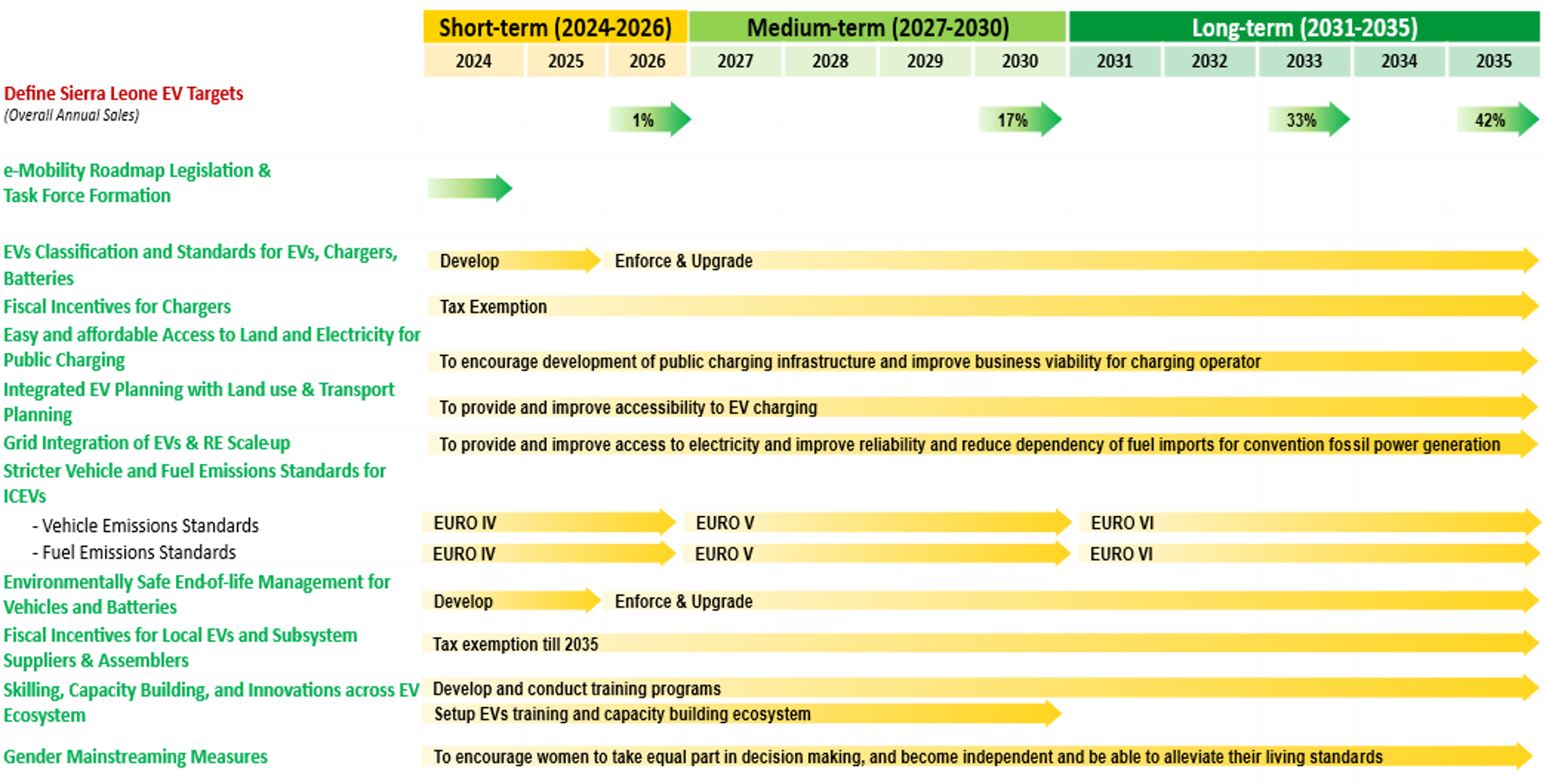
The project delivered a gender-responsive e-mobility roadmap for all vehicle segments and prioritized e-3Ws for early deployment. It completed the feasibility assessment of e-3Ws, implemented a pilot, and conducted performance monitoring. These activities informed the development of a battery-swapping and lease-based business model and a scale-up plan for deploying up to 100 e-Kekes. The model clarified stakeholder roles, outlined financing flows, identified revenue opportunities, and reduced operating costs, supporting implementation of the National e-Mobility Strategy (2024–2035) and advancing low-emission, inclusive electric transport in Sierra Leone